By Andy
02 Mar, 2026
Uncategorized
#ChildVisionCare, #EyeHealthTips, #EyePatching, #LazyEyeTreatment, #NaviMumbai, #VisionImprovement, Amblyopia, kharghar, LazyEye, PediatricOphthalmology
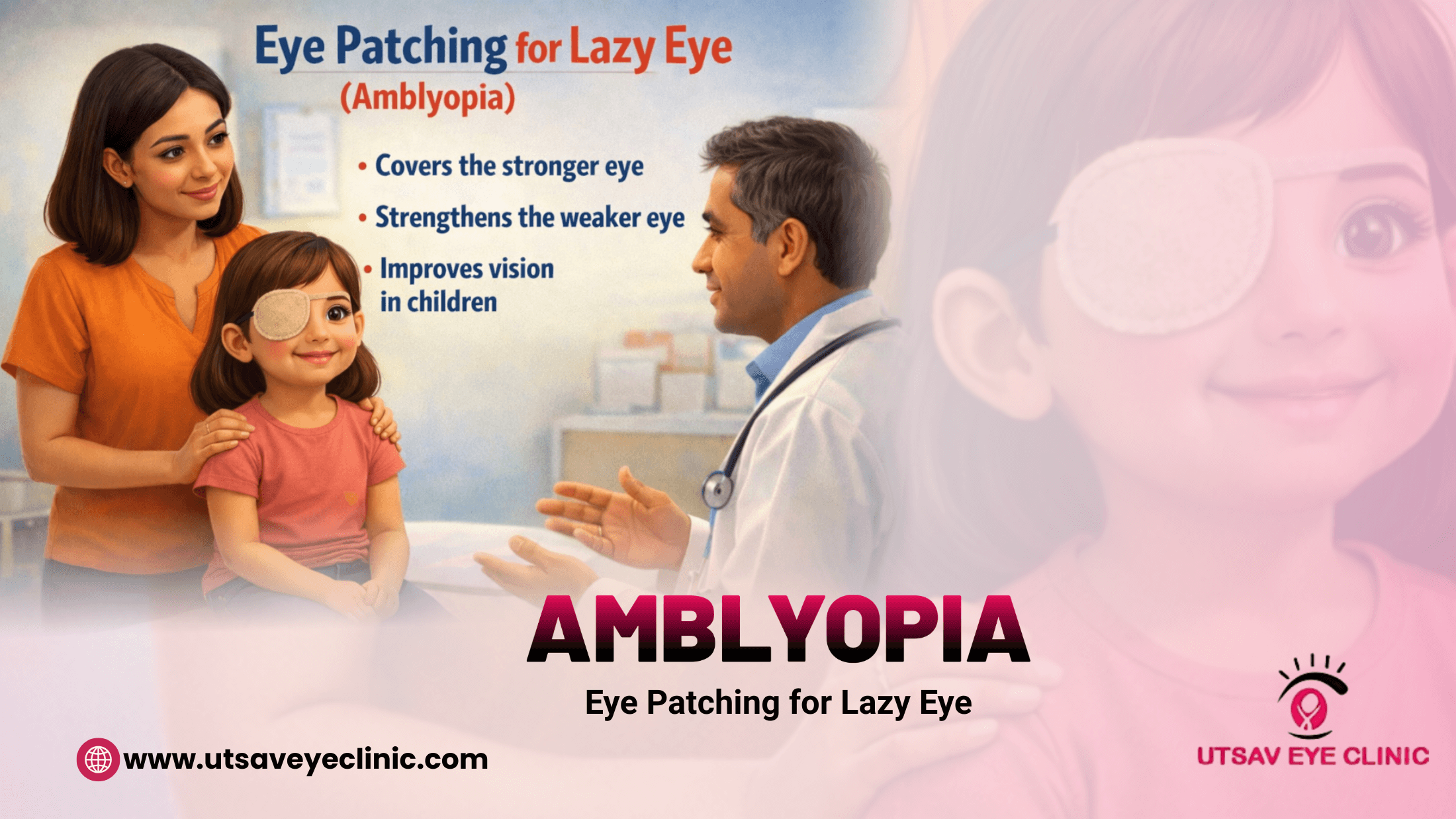
If your child has been diagnosed with lazy eye, it is natural to feel worried. Eye patching for lazy eye. Eye patching is one of the most common treatments recommended by doctors. But what exactly does it involve? How long should your child wear the patch, and how effective is it? If you are searching for amblyopia (lazy eyes) in Navi Mumbai or trusted lazy eyes Treatment in Kharghar, this guide will explain everything in a simple, easy-to-understand way.
What Is Lazy Eye (Amblyopia)?
Lazy eye, also called amblyopia, occurs when one eye develops weaker vision than the other. The brain may start relying more on the stronger eye, which keeps the weaker eye from developing properly.
Even if the weaker eye looks normal, its vision may not be strong.
If untreated, lazy eye can cause:
- Permanent loss of vision in the weaker eye
- Difficulty judging distances
- Trouble reading or learning
- Higher risk if the stronger eye gets injured later
Early treatment works best. Parents concerned about Amblyopia lazy eyes Navi Mumbai can see significant improvements when treatment begins early.
Learn more about treatment options at Amblyopia Treatment in Navi Mumbai.
How Does Eye Patching Work?
Eye patching helps the weaker eye develop by limiting the use of the stronger eye.
Here is how it works:
- Cover the stronger eye with a patch
- Encourage the weaker eye to work harder and develop better vision
- Over time, the weaker eye becomes stronger and more coordinated
Think of it like exercising a weak muscle consistent use strengthens it.
You can also consult a Pediatric Eye Specialist in Navi Mumbai for guidance on lazy eyes Treatment in Kharghar.
Recommended Duration for Wearing an Eye Patch
The time your child needs to wear the patch depends on:
- Age of the child
- How severe the lazy eye is
- Cause of the problem
Mild cases often need 2 hours per day, while moderate or severe cases may require 4–6 hours daily. Some children may need treatment for a few months, while others may continue for 1–2 years. Regular checkups are important to track improvement safely.
Parents searching for Amblyopia lazy eyes Navi Mumbai should follow the doctor’s schedule carefully, as more hours do not always mean faster improvement. For additional guidance, you can check Eye Patching for Lazy Eye Treatment.
What Is the Success Rate of Eye Patching?
Eye patching is highly effective, especially when started early.
Studies show:
- 70–90% of children with mild to moderate lazy eye improve
- Best results occur if treatment starts before age 7–8
Older children can still benefit, but progress may take longer. Families planning lazy eyes Treatment in Kharghar achieves the best outcomes with early intervention.
Monitoring ensures safe results for children with Amblyopia, lazy eyes Navi Mumbai.
Are There Any Side Effects?
Eye patching is generally safe, but minor issues may occur:
- Skin irritation from adhesive patches
- Initial frustration or discomfort
- Temporary difficulty with tasks like writing or walking
These effects are usually short-term and disappear with time. Serious complications are rare. Regular follow-ups are important for children with Amblyopia lazy eyes, Navi Mumbai.
Tips to Help Your Child Adjust to Eye Patching
Consistency is key for successful lazy eye treatment in Kharghar. Here are some tips:
- Let your child choose fun or colorful patches
- Schedule patching during activities they enjoy
- Use reward charts or small incentives
- Encourage reading, drawing, or puzzles while patching
- Be patient and positive
Can Lazy Eye Be Treated Without Patching?
Some children may benefit from glasses, vision therapy, or atropine drops. However, for most children with amblyopia (lazy eyes) in Navi Mumbai, patching remains the most effective treatment. A complete eye exam helps determine the best plan for your child.
When Should You Consult a Specialist?
You should see an eye specialist if your child:
- Often squints or covers one eye
- Has noticeable eye misalignment
- Struggles with reading
- Tilts their head while watching TV
- Has a family history of lazy eye
Early detection ensures better outcomes. Families searching for Amblyopia, lazy eyes Navi Mumbai and considering lazy eyes Treatment in Kharghar should act promptly.
Final Thoughts
Eye patching for lazy eye may seem simple but is very effective. It strengthens the weaker eye, improves vision, and prevents long-term vision problems.
For parents exploring lazy eye treatment in Kharghar, taking early action and following a professional plan can make a lasting difference. Children with Amblyopia lazy eyes Navi Mumbai can achieve better vision and greater confidence in their daily activities.
More
Cataracts are among the most common age-related eye conditions. Although some people choose to postpone treatment, Delay cataract surgery in Kharghar can lead to more than just blurred eyesight. Being aware of the possible risks and long-term vision impact helps you make an informed and timely decision about cataract surgery in Kharghar.
Understanding the Risks and Vision Impact of Delaying Cataract Surgery
A cataract develops when the eye’s natural lens gradually becomes cloudy, resulting in dim or unclear vision. Many individuals prefer to wait until symptoms worsen. However, postponing treatment can make the procedure more challenging and increase potential complications.
Delaying Laser Cataract Surgery in Kharghar may lead to issues often seen in advanced cases of Laser Cataract Surgery in Navi Mumbai, including:
- Progressive vision loss – As the cataract thickens, everyday tasks such as reading, night driving, or recognising faces become increasingly difficult.
- Greater surgical difficulty – Mature cataracts are denser and may require more surgical energy for removal, which can influence healing time.
- Elevated risk of complications – Untreated cataracts may contribute to conditions like glaucoma or inflammation, potentially affecting the optic nerve and overall eye function.
Why Early Cataract Surgery Makes a Difference
Addressing cataracts early protects your eyesight, minimises surgical risks, and promotes faster recovery. Removing the cloudy lens before it becomes too dense makes the operation smoother and more efficient. Choosing timely cataract surgery in Kharghar allows you to maintain independence in daily activities such as reading, driving, and using digital devices through reliable Cataract surgery in Kharghar.
Why People Delay Cataract Surgery
Despite the benefits, many individuals postpone cataract surgery in Kharghar for several reasons:
- Fear or anxiety about surgery – concerns about discomfort or complications.
- Minimal early symptoms – Mild vision disturbances may not seem urgent.
- Financial considerations – worries about cost or insurance coverage.
- Common myths – The belief that cataracts must fully “mature” before surgery is necessary.
Although these concerns are understandable, waiting too long may increase surgical complexity and recovery time.
The Impact of Delaying Cataract Surgery on Your Daily Life
Even in early stages, cataracts can reduce visual clarity. Night driving may feel unsafe due to glare and halos, while everyday tasks like reading labels or using a smartphone may require extra effort. Postponing treatment can also affect personal safety and independence. Reduced vision increases the likelihood of falls or accidental injuries, particularly in older adults.
Benefits of Timely Cataract Surgery
Cataract surgery is considered one of the safest and most successful procedures when performed at the appropriate time. Choosing cataract surgery in Navi Mumbai or opting for laser cataract surgery in Kharghar provides several key benefits of Cataract in Navi Mumbai, such as:
- Faster recovery with minimal downtime
- Lower complication risk compared to advanced cataracts
- Enhanced quality of life and improved safety
Modern techniques used in laser cataract surgery in Kharghar improve precision and reduce invasiveness, often leading to quicker healing and better visual results.
When Should You Consult an Eye Specialist?
Recognising early symptoms can help prevent unnecessary complications. If you begin noticing these changes in your vision, it’s time to see an eye specialist:
- Blurred or cloudy vision affecting daily tasks
- Glare or halos around lights, especially at night
- Difficulty identifying faces or objects clearly
- Frequent changes in glasses prescription
- Double vision in one eye
An early evaluation allows your specialist to determine the ideal timing for cataract surgery in Navi Mumbai. Acting before vision significantly declines makes the procedure safer and recovery smoother.
There is no need to wait for severe vision loss. Prompt treatment can protect both your quality of life and long-term eye health.
Why Choose UTSAV Eye Clinic in Kharghar
Selecting the right eye care centre plays a major role in surgical success. At UTSAV Eye Clinic, patients receive advanced treatment and personalised care for optimal results. Here’s why many trust our expertise:
- Skilled Surgeons – Specialists experienced in laser cataract surgery in Kharghar ensure accuracy and safety.
- Modern Technology – Advanced equipment supports minimally invasive procedures.
- Individualised Attention – Comprehensive guidance from consultation through follow-up care.
- Strong Safety Protocols – Strict hygiene standards for patient comfort and protection.
- Focused Visual Outcomes – Commitment to restoring sharp, clear vision.
Final Thoughts
Postponing cataract treatment can gradually reduce visual quality and affect daily living. Early management improves safety, simplifies surgery, and speeds up recovery. At UTSAV Eye Clinic in Kharghar, led by Dr Anand Kumar, patients receive advanced laser cataract surgery along with compassionate, personalised care. Taking timely action helps preserve clear vision and maintain independence.
More
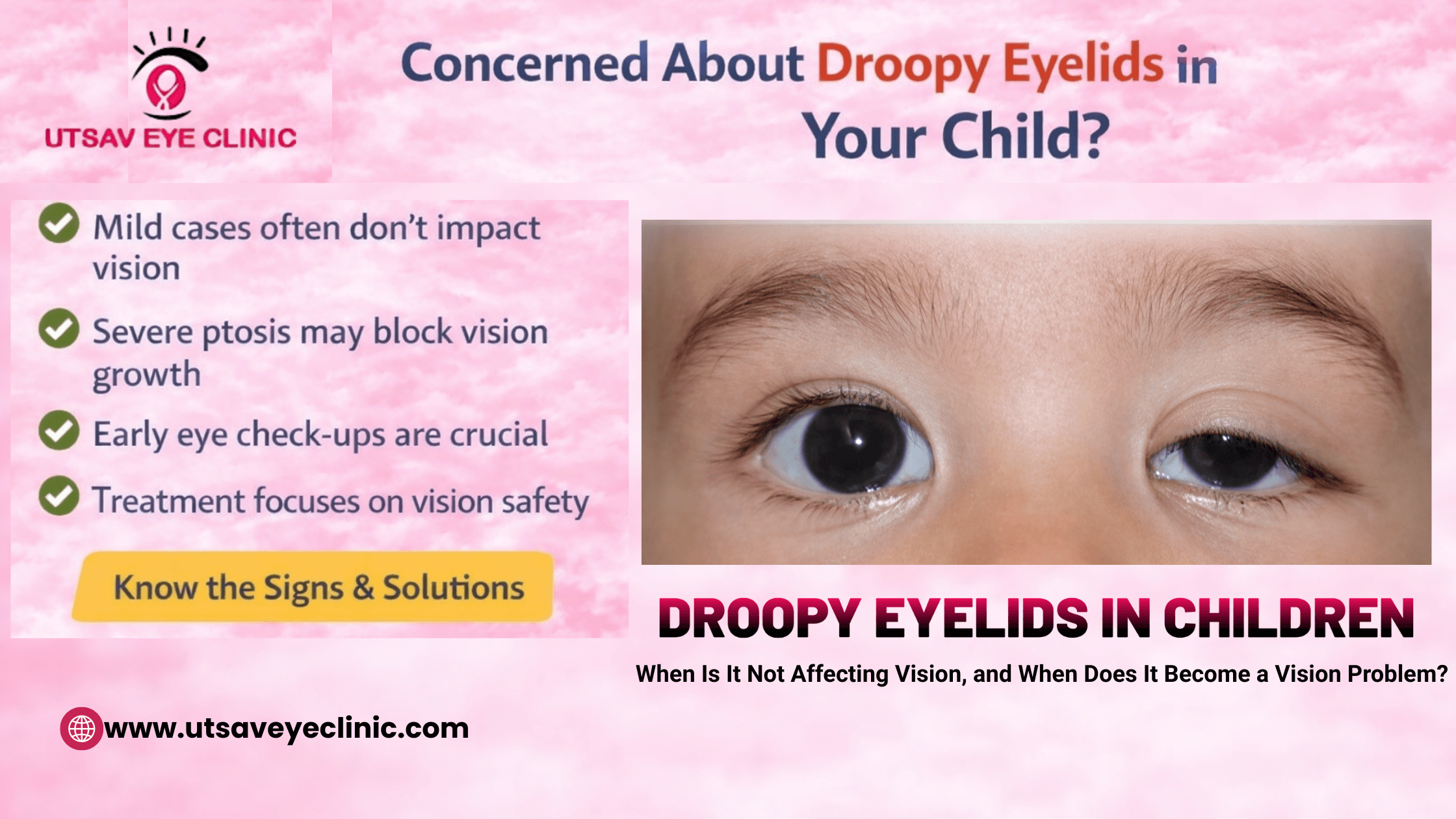
As a parent, noticing that your child’s eyelid looks lower than usual can be worrying. You may wonder if it is simply how their eye looks or if it could affect their eyesight in the future. Drooping of eyelids in children, known medically as ptosis, are sometimes harmless. However, in certain cases, they can interfere with normal vision growth. Understanding the difference helps parents make informed and timely decisions.
Understanding Droopy Eyelids in Children
Ptosis occurs when the upper eyelid sits lower than normal. It may involve one eye or both. Some children are born with this condition, while others may develop it later because of muscle or nerve-related issues. Parents searching for drooping of lids in Navi Mumbai often want to know whether this condition is serious or only affects appearance. The key factor is whether the eyelid is blocking vision.
When Droopy Eyelids Are Not Affecting Vision
In many children, the drooping is mild and does not disturb eyesight. It is usually not a concern if:
- The eyelid does not cover the pupil
- The child can see clearly from both eyes
- There is no need to lift the chin or eyebrows to see better
- Vision tests show healthy development
In such situations, the issue is mostly cosmetic. Doctors may recommend observation and routine check-ups to ensure vision continues to develop normally.
When Drooping of Eyelids Become a Vision Problem
A Drooping of Eyelids becomes a medical concern when it starts interfering with vision. Signs to watch for include:
- The eyelid covering part or all of the pupil
- The child lifting their chin to see properly
- One eye appearing weaker than the other
- Delayed eye contact or visual response
If vision is blocked during early childhood, the brain may not learn to use that eye properly. This can result in lazy eye (amblyopia), which may lead to long-term vision problems if not treated early.
Why Early Eye Check-Ups Matter
Vision develops quickly during the first few years of life. If clear images do not reach the brain, visual development may be affected. Parents looking into ptosis Treatment in Navi Mumbai are usually advised treatment only when eyesight is at risk. In mild cases, simple monitoring may be enough.
How Droopy Eyelids Are Treated
Treatment depends on the severity of the condition:
- Mild ptosis: Regular eye monitoring
- More significant ptosis: Surgery may be recommended
The main goal is always to protect and support vision. Cosmetic improvement is considered secondary. Treatment is carefully planned by an experienced Eye plastic surgeon in Kharghar to ensure safe and appropriate care for each child.
Is Surgery Safe for Children?
If surgery is necessary, it is performed after carefully evaluating the child’s age, eyelid muscle strength, and visual needs. The purpose is to raise the eyelid enough to allow clear vision while maintaining eye safety. Parents considering ptosis surgery at Utsav Eye Clinic receive clear guidance about the procedure, recovery, and follow-up care. After surgery, regular visits help ensure proper healing and healthy visual development.
How Parents Can Support Eye Health at Home
Parents can help maintain their child’s eye health with simple daily habits:
- Observe for signs like squinting or head tilting
- Keep up with regular eye check-ups
- Reduce excessive screen time
- Provide a balanced, nutritious diet
- Ensure proper lighting during reading or studying
- Encourage outdoor activities
- Follow prescribed treatments consistently
Small steps at home can greatly support healthy vision.
Why Choose Utsav Eye Clinic for Ptosis Treatment in Navi Mumbai?
At Utsav Eye Clinic, your child’s vision is always the top priority. Each child with Drooping of Eyelids is thoroughly examined to decide whether treatment or observation is needed. Doctors explain the condition clearly so parents can make confident decisions. Care is personalized based on age, eye health, and visual requirements, especially for families seeking treatment of Drooping of upper lids in Navi Mumbai.
The clinic provides a comfortable and child-friendly environment, helping families feel supported throughout the process.
Final Thoughts
Droopy eyelids in children may appear concerning, but not every case affects vision. The important step is determining whether the eyelid is simply a cosmetic difference or interfering with proper visual development. A detailed eye examination provides clarity and reassurance. With proper guidance from experienced specialists like Dr. Anand Kumar at Utsav Eye Clinic, children with ptosis can receive the right care to ensure healthy and normal vision development.
More
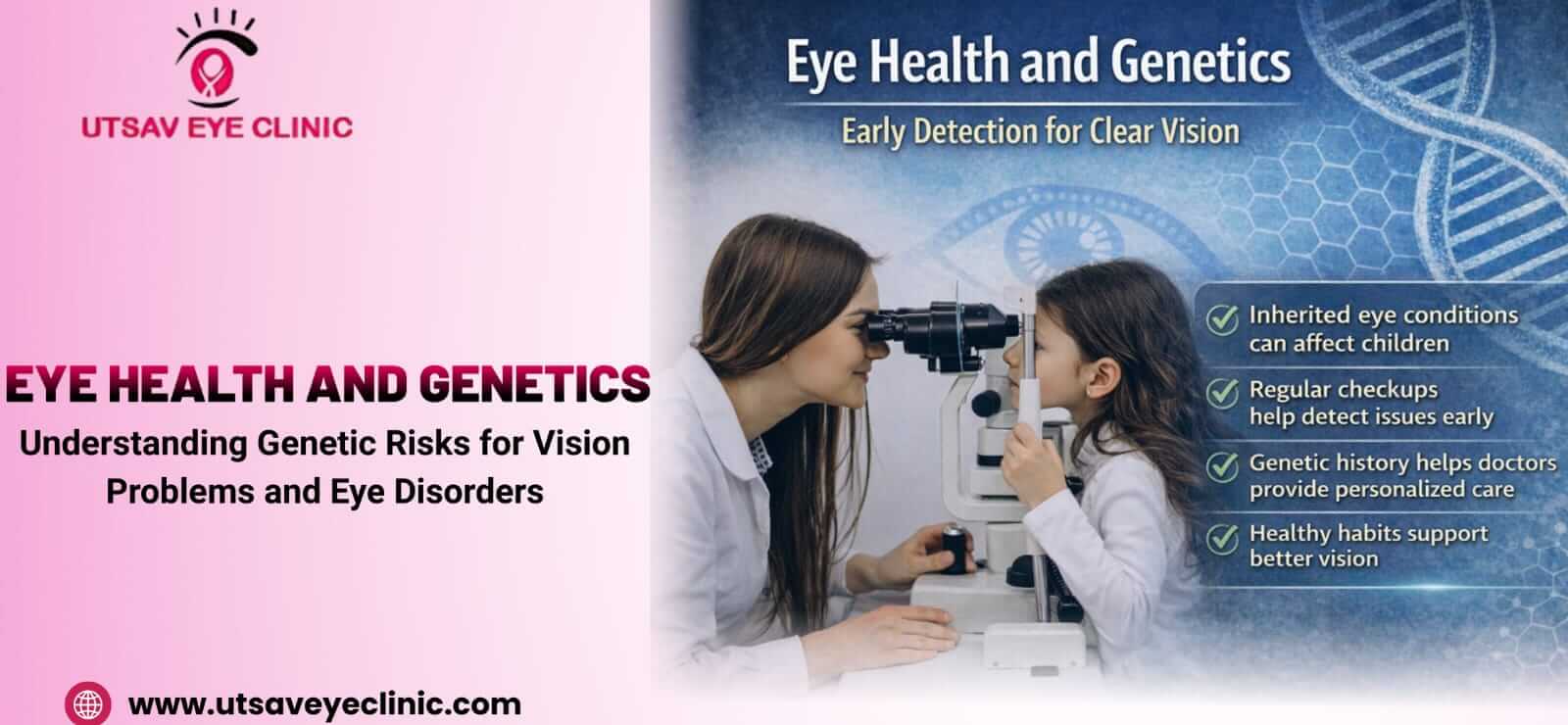
Have you noticed that some vision problems seem to run in families? Eye health and genetics play a key role perhaps your parents wear glasses, or a close relative has glaucoma or retinal issues. Genetics can play a key role in eye health, and knowing this can help you take better care of your vision.
At Utsav Eye Clinic, we often meet patients surprised to learn that some of their eye conditions may be inherited. The good news is that staying aware and having regular eye checkups with experienced Eye Specialists in Kharghar can make a big difference.
What Is the Link Between Genetics and Eye Health?
Genetics determines traits passed down from parents. Just like hair color or height, some eye conditions can be inherited from family members. This doesn’t mean everyone with a family history will develop the same eye problems, but it can increase the risk.
Knowing your family’s eye health history allows eye doctors to monitor your vision more closely, often catching issues before symptoms appear.
Common Vision Problems Linked to Genetics
Some eye problems are more likely to appear if they run in the family. Being aware of these risks helps you take steps to protect your eyesight.
Glaucoma develops slowly and often shows no early symptoms. It can damage the optic nerve and lead to vision loss if left untreated. Those with a family history should have regular eye exams with experienced
Ophthalmologists in Navi Mumbai.
Congenital cataracts are cataracts that babies are born with or develop very early. Early diagnosis and treatment are vital for healthy vision. That’s why congenital cataract in children in Navi Mumbai requires attention from specialized pediatric eye doctors.
Nearsightedness and farsightedness can be inherited. Children whose parents wear glasses are more likely to develop these issues early.
Some retinal conditions run in families and can affect eyesight gradually. These issues may not cause pain but can slowly reduce vision if not monitored.
-
Neuro-Related Eye Conditions
Certain eye problems are linked to the brain and nervous system rather than the eyes themselves. These require careful assessment by trained
Neuro-Ophthalmologists Kharghar. Treatments such as congenital glaucoma treatment in Kharghar help manage rare hereditary eye diseases effectively.
-
Why Family Eye History Matters
Sharing family eye history is important. It helps your doctor:
- Suggest checkups at the right age
- Monitor your eyes more carefully
- Detect problems early
- Create a personalised care plan
Even if your vision seems normal, inherited risks can still be present.
Eye Health in Children and How Family History Can Affect Their Vision
Children’s eyes are still developing, and some eye problems can be inherited. Understanding Eye Health and Genetics and doing early eye checking can detect issues before they affect learning or daily life.
At Utsav Eye Clinic, we recommend early eye screenings to find inherited conditions like congenital cataracts or nearsightedness. Parents should also watch for signs like squinting, sitting too close to the TV, or headaches and share family eye history with the child’s specialist for proper care.
Can Lifestyle Reduce Genetic Risks
While you cannot change your genes, healthy habits can protect your eyes and reduce the impact of genetic risks:
-
Eat a balanced diet rich in fruits and vegetables
-
Take regular breaks from screens
-
Wear sunglasses to protect eyes from sunlight
-
Avoid smoking
-
Get routine eye checkups
Even small steps can make a big difference in maintaining clear vision.
When Should You Get Your Eyes Checked
Consider an eye exam if:
-
Eye problems run in your family
-
You notice blurry vision, headaches, or eye strain
-
Your child struggles to read or focus
-
You are over 40
-
You have diabetes or other health issues
Regular checkups do more than correct vision they help protect your eyes for life.
Final Thoughts
Understanding the link between Eye Health and Genetics helps you take control of your vision. Genetic risks don’t mean vision loss is certain. At Utsav Eye Clinic, under the care of Dr. Anand Kumar, we focus on early detection, patient education, and personalised eye care at all stages of life.
If you’re looking for a trusted eye clinic in Navi Mumbai, scheduling a checkup is a simple way to protect your vision for years to come.
More
What is Glaucoma?
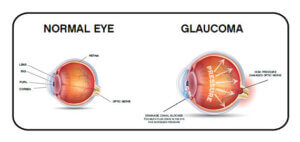
Elevated eye pressure is a major risk factor and the cause of glaucoma. The high pressure in the eyes typically damages the eye’s optic nerve in one or both eyes. It commonly occurs in people over the age of 40 and results in vision loss and blindness due to glaucoma. Our Glaucoma Specialist in Kharghar explains more about this dreadful eye condition.
Changes to vision caused by glaucomatous damage are usually quite slow and gradual
this makes the changes difficult to notice in their early stages. Patients diagnosed with glaucoma eventually developed tunnel vision. The space in front of the eye is known
as the anterior chamber a clear fluid called aqueous humor flows continuously in and out of the anterior chamber and nourishes nearby tissues.
Types of Glaucoma
There are two main kinds of glaucoma:
1. Open-angle glaucoma:
2. Angle-closure glaucoma.
1. Open-angle glaucoma:
Normally, this fluid leaves the anterior chamber at the open angle where the cornea and iris meet through a spongy meshwork. A healthy eye usually balances the rate of fluid production and the rate of fluid drainage out of the eye through this meshwork to
maintain normal pressure in the eye. However, in open-angle glaucoma which is the most common form of glaucoma even though the drainage angle is open, the fluid passes too slowly through the meshwork drain and as fluid builds up in the eye the pressure inside the eye rises to a level that may damage the optic nerve resulting in vision loss.
2. Angle-closure glaucoma.
In contrast, angle-closure glaucoma is caused by complete and total blockage of drainage canals resulting in a sudden and extreme rise in eye pressure, and this demands immediate medical attention. Without treatment, people with glaucoma will slowly lose their peripheral or side vision. Glaucoma detection requires a comprehensive dilated eye exam and includes the following:
• Tonometry measures the fluid pressure in the eye. This is an examination of the optic nerve head and retinal nerve fiber layer.
• Perimetry provides a visual map and quantified evolution of your vision gonioscopy and assesses the anatomical angle formed between the cornea and the iris.
• Pachymetry is a measurement of cornea Thickness.
• OCT – an optical coherence tomography or oct is a detailed eye scanning system.
Are You at Risk of Getting Glaucoma?
Risk factors include:
1. Being over 40 years of age
2. Family history of eye injury or post-surgical complications
3. Being nearsightedness or myopia
4. Long-term steroid use
5. Heart disease and high blood pressure
6. Diabetes
7. Hypothyroidism
What is the Treatment Available for Glaucoma?
Treatments include:
1. Medicines
2. Laser
3. Conventional surgery
4. Or a combination of any of these
Medicines in the form of eye drops are the most common early treatment for glaucoma.
Glaucoma medications are only effective if used daily as prescribed.
Laser Trabeculoplasty:
Laser Trabeculoplasty a high-intensity beam of light is used to make several evenly spaced burns that stretch the drainage holes in the meshwork to help fluid drain out of the eye. There is no reversal of the site already damaged by glaucoma.
Early Detection of Glaucoma:
Regular eye examinations and treatment can prevent blindness from glaucoma. To know more about glaucoma consult our Glaucoma specialist in Kharghar today.
You can book an appointment at Utsav Eye Clinic if you have any symptoms of glaucoma.
More
The National Eye Donation Fortnight is observed every year from 25thAugust to 8th September. The aim of the campaign is to create mass public awareness about the importance of eye donation and to motivate people to pledge their eyes for donation after death.
What is Eye Donation?
Eye donation is an act of donating one’s eyes after his/her death. People who are visually impaired due to corneal disease can be benefited. It is an act of charity, purely for the benefit of the society and is totally voluntary. It is done after death. So eye-donation should be encouraged as one of the best means of social service. To enable another person obtain vision is one of the best forms of charity. Even after death the donor lives in the eyes of recipient. Eyes from a dead person can enable two blind people to acquire vision.
What is the use of eyes received?
The eyes, which are received through such magnanimous gestures, are of great benefit to the society. The front, clear and transparent tissue of the eye called as cornea can be used to restore vision to corneal blind person. The other portions of the eye are also used for research and training purposes to develop cures for some of the common eye diseases.
What is Corneal Blindness?
The Cornea is the clear tissue covering the front of the eye. It is a focusing element of the eye. The Vision is dramatically reduced or lost if the cornea becomes cloudy. This loss of the vision is referred as corneal blindness.
Is there a cure for corneal blindness?
Yes. Removing the damaged cornea and replacing it with a healthy cornea by surgery can cure corneal blindness. Till date the treatment of the corneally blind people is corneal grafting. Artificial corneas have not yet been developed and hence the only source for cornea is from our fellow human beings.
How can one donate eyes?
The eyes of a dead person can be used only if they are taken out within 6 hrs of death. When a person who has given consent for the donation of one’s eyes dies, the eye should be kept wet by sprinkling water on them. Otherwise pieces of cotton wool soaked in water should be placed on both the eyes so that the cornea does not become dry till the eye-surgeon arrives. After the removal of the eyes the eyelids will be stitched together and there will be no visible sign of the eyes having been removed. The entire process is completed within 10-15 mins, therefore if one pledged to donate his eyes after death, it is the duty of his relatives to inform to the nearest eye bank after his death.
How to register: http://ebai.org/donator-registration/
After the removal of eyes, would there be any complications or disfigurement?
There are two methods adopted for removal of eyes. Some eye banks would remove the whole eyeball. In such a case there may be temporary bleeding. The team is well trained to take care of such eventualities. There would be no disfigurement. The eye bank team, after the removal of eyes would properly close the eyes so that there is no disfigurement. The second method is the removal of only the clear transparent tissue. Here also a plastic shield is placed in place of the tissue and no difference can be noticed.
Is eye donation against religious principles or traditions?
All religions endorse eye donation. There are numerous examples in our traditions and scriptures, which endorse eye and organ donation. A part of the body would be consumed by flames and reduced to ashes or which is buried and allowed to decay and disintegrate & cannot be put to a better use than restoring vision to the needy.
Am I too old/young to be an eye donor?
No. There is generally a use for eyes of any age.
Can the eyes of the individuals having diabetes, hypertension be donated?
Yes. People with systemic diseases can also donate eyes.
Who cannot donate their eyes?
Patients suffering from Rabies, Tetanus, Aids, Jaundice, Cancer, Gangrene, Brain Tumor, Food Poisoning, Septicemia & a person who has died due to drowning etc. cannot donate their eyes.
For more information, kindly visit
http://www.v2020eresource.org/content/files/EYEBANK_FAQ/eyebankfaq.htm
https://www.nhp.gov.in/national-eye-donation-fortnight-2016_pg
More
Headaches behind the eyes are common, and they may result from underlying health issues ranging from eye strain to migraine.
Eyestrain
Focusing and refocusing on a screen for long periods can cause eye strain, which can also result from problems with vision.
Fatigue from eye strain can cause pain behind one or both eyes. A person may also experience pain in their eyes or blurry vision.
Causes
Some underlying health issues that cause eye strain include:
optic neuritis, which is inflammation of the optic nerve.
scleritis, which is severe inflammation of the white part of the eye
glaucoma, a disease that affects the optic nerve
Graves’ disease, an autoimmune disorder
Staring at a computer, TV, or phone screen for long periods can also cause eye strain.
Migraine
In addition to a migraine headache, a person may experience:
- eye pain
- dizziness
- weakness
- nausea
- sensitivity to light and sound
- mood changes
- vomiting
- impaired vision
Causes
While doctors are unsure what, precisely, causes migraine, they recognize several common triggers. These are not the same for everyone.
Migraine triggers may be:
emotional, such as stress or anxiety
dietary, such as chocolate or alcohol
physicals, such as a lack of sleep or poor posture
hormonal, such as menstruation
environmental, such as strong smells, smoke, or flickering lights
medication-related, involving sleeping pills or hormone therapies, for example
And More Problems Like
Sinusitis
Cluster headaches
Tension headaches
Treatment
Avoiding the various factors below can often help relieve or prevent pain behind the eyes:
- loud noises
- strong perfume and other odors
- infections
- alcohol use
- hunger
- stress
- changes in hormones
- fatigue
- bright lights
- a lack of sleep
Over-the-counter pain medication can often relieve mild or moderate headaches, but when the pain is severe, prescription medication may be necessary.
Utsav Eye Clinic
Dr. Anand Kumar
Kharghar Navi Mumbai
Utsav Eye Clinic: Eye Clinic in Kharghar | Eye Specialist Doctor
More
Eye Problems Due to Prolong Use of Mobiles, Tablets, Laptops, Desktops & Televisions, etc.
Since technology is such an integral part of our life, most of us spend many hours staring at screens today, whether they are computers, televisions, or our smartphones. This can cause severe strain on our eyes and vision, and lead to many symptoms like headaches, watery eyes, gritty eyes, sore and red eyes, along with neck and back strain. Computer Vision Syndrome refers to such a state where our eyes start getting these sorts of symptoms over a period.
Working adults aren’t the only ones who are dealing with Computer Vision Syndrome. Even children, who use tablets and gaming devices have seen an increase in the symptoms.
Causes of a Computer Vision Syndrome
There are four main reasons for this syndrome:
Staring at a bright, lit screen means your rate of blinking decreases. This causes dry eyes which causes symptoms like grittiness, foreign body sensation, “sand in eyes” feeling, redness and soreness of eyes.
Prolonged staring for near vision results in convergence spasm of the small eye muscles since the eyes are not geared for prolonged near work. This causes headaches, and also sometimes, inability to focus.
Neck and back staring are the result of improper posture and improper positioning of the computer screen or desk, and also using inappropriate chairs. Reading in bed from screen devices also causes significant problems.
You’re more likely prone to this syndrome if you all ready have any preexisting dryness of the eyes, or if you are not wearing the correct power of glasses.
Treatment of Computer Vision Syndrome
Computer Vision Syndrome is a lifestyle disease, and therefore, its prevention is better than its cure. Minor lifestyle modifications can ensure that you enjoy all your screen devices without any hassles.
The changes that you can easily make in your life to avoid the syndrome include:
Limit screen time: Make sure you are aware of the amount of time you spend on-screen devices and try to decrease your dependence on smartphones.
Ensure proper posture: Make sure your keyboard is positioned to support your wrists, and your computer screen is positioned so that you can look down on the monitor. Optimally, the computer screen should be 15 to 20 degrees below eye level (about 4 or 5 inches) as measured from the center of the screen and 20 to 28 inches from the eyes. Do not read off-screen devices in bed, or in a semi-reclining
Take appropriate breaks: Do not stare at a screen without taking breaks. Remember to follow the 20-20-20 rule; take a 20-second break to view something 20 feet away every 20 minutes.
Think and Blink: Remember to blink since blinking helps redistribute the tear film, and prevents dryness of the eyes.
Proper light: Ensure that there is proper ambient lighting and do not work in the dark. Also, avoid glare from screens by adjusting its brightness, and ensuring the adequate position of ambient lights.
Wear spectacles: Make sure your vision problems are treated, and your eyeglasses prescription is up to date. Limit the use of contact lenses since they aggravate dryness and strain.
Use teardrops: Use over the counter, preservative-free lubricating eye drops to soothe your eyes. Do not use honey, rosewater or other home remedies. Do not self-medicate, or use steroid drops unless prescribed by an ophthalmologist.
See your eye doctor: In case your symptoms persist, please make sure you seek a comprehensive eye examination with your eye doctor since these symptoms can sometimes signify other diseases including undiagnosed refractive errors.
Our Team
Dr. Anand Kumar
Utsav Eye Clinic
Kharghar Navi Mumbai
More
Can anything be done for adults with strabismus (misaligned eyes)?
Yes. Both the variations of adult squint can usually be treated with excellent results. Your doctor will suggest either a surgical or non-surgical treatment, depending on the cause, duration, and severity of the squint.
What causes squint in adults?
The reasons for squint in children and adults are different.
A latent childhood squint may become prominent with eye strain in the later stage of life.
A loss of vision in one eye can result in its outward deviation.
New squint that develops in an adult can be due to disorders of thyroid eye disease, myasthenia gravis, trauma, stroke or tumors.
Sometimes, your doctor cannot determine an identifiable cause for the squint, and these are called idiopathic.
What are the signs and symptoms of squint?
The most noticeable sign of squint, of course, is the misalignment of eyes, which can be noted by the patient, as well as by the observer. Associated symptoms of squint include:
Eye fatigue and tiredness around the eyes
Double vision which can be very annoying, and often leads to intractable headaches
Overlapped or blurred images causing confusion
Difficulty in reading and near work
Loss of depth perception resulting in stumbling and past pointing
What are the benefits of squint surgery in adults?
Many people are of the view that squint surgery in adults is strictly a cosmetic procedure. That is usually not true, and in fact, the operation can result in a significant functional gain. It causes:
Improvement in eye alignment, making the gaze straight
Remove, or at least significantly decrease, diplopia or double vision
Decrease eye fatigue
Provide a definite cosmetic growth, resulting in better social and professional interactions
Who treats squint in adults?
An eye specialist who has had specialized training in strabismus is the most qualified to treat any misalignment of eyes. Usually, ophthalmologists who specialize in the care of children, pediatric ophthalmologists, are also trained in a squint, since the disease is more common in children. That shouldn’t deter you from seeking an appointment with the doctor.
That said, you must evaluate your comfort level with the doctor, his or her bedside manner, credentials, and the hospital/ operation theater facilities before deciding on who can best take care of your eyes.
Utsav Eye Clinic
Dr. Anand Kumar
Utsav Eye Clinic: Eye Clinic in Kharghar | Eye Specialist Doctor
More
Myth: Cataract is an old age problem
Fact: Most cataracts are senile but can occur at any age. They can also be congenital or caused by steroid intake, injury, diabetes or eye inflammations.
Myth: Cataract can be prevented by medicines, diet, eye exercise or yoga/Cataract can be cured by eye drops, diet or yoga.
Fact: There is no prevention or medical cure for cataracts. The only definitive treatment is cataract surgery. To your surprise, some early cataracts may never progress and may require no treatment if they are not causing any problem in the vision.
Myth: Cataract surgery should be delayed and done only when it matures or ripens.
Fact: The best time to get the surgery done is when you start having early vision problems. There is no point in delaying the surgery too much as the ultrasonic system works faster and is safer on softer cataracts than the hard or mature ones.
Myth: Is it true that cataracts can be removed with lasers without an incision? Or the complete surgery is bladeless and doe with laser only?
Fact: There is no surgery possible without an incision. A cataract is opacity or clouding of the natural lens, which is removed by ultrasonic fragmentation of cataract into tiny pieces by a phaco probe and sucked through a small incision (2.2mm). At present, we are using the Femto laser-bladeless technique of operating cataracts. This technique creates incisions, then the circular opening of the anterior capsule and partial nucleus fragments, which is further followed by routine phacoemulsification with the insertion of the foldable intraocular lens. Hence, laser assists in few steps of phaco surgery but does not completely replace it.
Utsav Eye Clinic
Dr. Anand Kumar
Utsav Eye Clinic: Eye Clinic in Kharghar | Eye Specialist Doctor
More