By Andy
10 Apr, 2026
Ptosis
#DroopingEyelids, #EyeClinic, #NaviMumbai, #PtosisSurgery, #PtosisTreatment, EyeCare, EyeSurgery, kharghar, UtsavEyeClinic, VisionCare
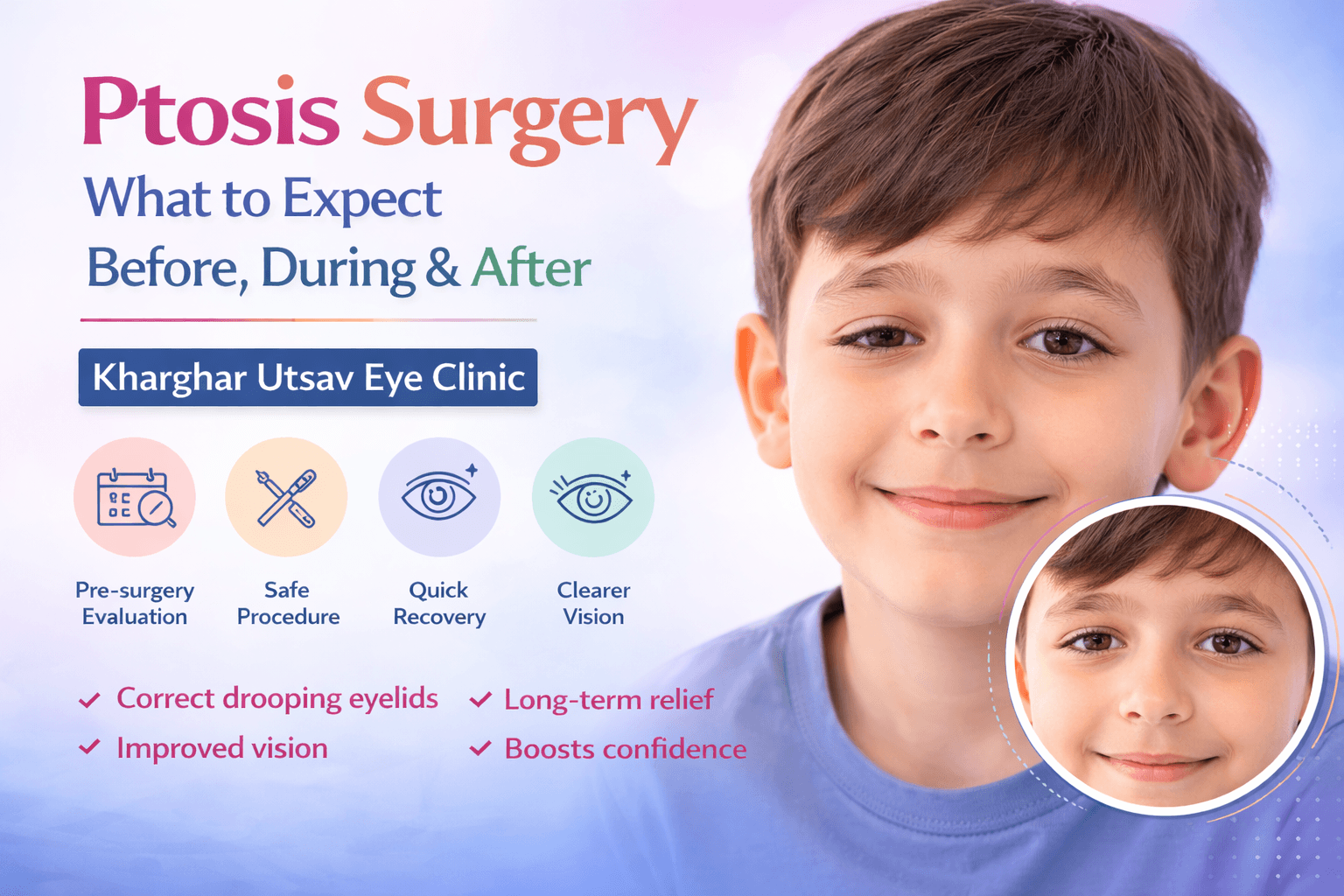
Have you been noticing your eyelids drooping lately, making you look tired or affecting your vision? This condition, known as ptosis, is quite common and can impact both your appearance and daily life. Many people search for solutions for drooping of lids in Navi Mumbai, especially when it starts interfering with vision.
Ptosis occurs when the muscle that lifts the eyelid becomes weak or stretched. Today, advanced options like ptosis surgery in Navi Mumbai provide safe and effective long-term results.
Understanding Drooping of Lids in Navi Mumbai
The problem of drooping of lids in Navi Mumbai is seen across all age groups. It may develop gradually with age or be present since birth.
Some common causes include:
- Aging and weakening of eyelid muscles
- Congenital ptosis (present at birth)
- Nerve-related conditions
- Eye injuries or previous surgeries
Apart from affecting appearance, ptosis can also block vision and cause discomfort. If you experience difficulty keeping your eyes open or feel constant eye strain, it’s important to consult a specialist.
Who Needs Ptosis Surgery?
Not every case requires surgery, but certain symptoms indicate the need for treatment. You may need surgery if you experience:
- Eyelid covering your pupil
- Difficulty opening your eyes fully
- Frequent headaches due to strain
- Uneven eyelids affecting confidence
Doctors assess the severity of the condition and recommend the best treatment. If required, they may suggest ptosis treatment in Kharghar for long-term relief.
Preparing for Ptosis Surgery (Before Surgery)
Before undergoing surgery, proper evaluation is essential. When opting for ptosis treatment in Kharghar, here’s what the process typically includes:
- Detailed consultation with an eye specialist
- Complete eye examination and diagnosis
- Review of your medical history
- Assessment of eyelid muscle strength
- Guidance on pre-surgery instructions
- Avoiding certain medications before surgery
- Following basic precautions as advised by the doctor
Choosing an experienced clinic plays a major role in ensuring safe and successful treatment.
What Happens During Ptosis Surgery in Navi Mumbai
Understanding the procedure can help reduce anxiety. Ptosis surgery in Navi Mumbai is a safe and effective procedure when performed by experts.
Here’s what happens during the surgery:
- Local anesthesia is used to numb the eyelid area
- A small incision is made in the upper eyelid
- The eyelid muscle is tightened or repositioned
- The incision is carefully closed for proper healing
- The procedure typically takes 30 to 60 minutes
- Patients are usually discharged on the same day
Recovery After Ptosis Surgery (Post-Surgery Care)
After surgery, it is normal to experience mild swelling or discomfort. However, recovery is usually quick and manageable. You may notice slight redness, swelling, or dryness in the eyes. Doctors usually prescribe eye drops and medications to support healing.
To recover faster:
- Avoid rubbing your eyes
- Limit screen time for a few days
- Follow all post-surgery instructions
- Attend follow-up appointments
Most people resume normal activities within a few days, with complete healing over a couple of weeks.
Results and Benefits of Ptosis Surgery
The results of ptosis surgery in Navi Mumbai are highly effective and long-lasting. Once the swelling subsides, patients notice a clear improvement in both vision and appearance.
Key benefits include:
- Improved and clearer vision
- More youthful and alert look
- Increased confidence
- Long-term correction of the condition
This makes surgery one of the best solutions for treating ptosis effectively.
Risks and Complications
Ptosis surgery is generally safe, but like any procedure, it may involve minor risks. These are rare and usually temporary.
Possible risks include:
- Mild irritation or dryness
- Temporary asymmetry during healing
- Infection (very rare with proper care)
Choosing a skilled specialist for drooping of lids in Navi Mumbai significantly reduces these risks.
Cost of Ptosis Surgery in Kharghar & Navi Mumbai
The cost of surgery can vary depending on several factors such as the severity of ptosis, the technique used, and the experience of the doctor. While affordability is important, it’s always better to focus on quality care and expertise when choosing ptosis treatment in Kharghar. A trusted clinic ensures better safety and long-term results.
Why Choose Utsav Eye Clinic in Kharghar
When it comes to reliable eye care, Utsav Eye Clinic is a trusted name for treating drooping of lids in Navi Mumbai.
The clinic offers:
- Experienced ophthalmologists
- Advanced surgical technology
- Personalized care for every patient
- Proven track record of successful treatments
Choosing the right clinic ensures not just treatment, but complete care and confidence.
Final Thoughts
Drooping eyelids may seem like a minor concern at first, but they can gradually affect both your vision and overall appearance. Ignoring the signs may lead to increased discomfort and impact your daily activities over time. With modern advancements like ptosis surgery in Navi Mumbai, effective and long-lasting solutions are available to restore both function and confidence. If you’ve been noticing changes in your eyelids, consulting experienced specialists at Utsav Eye Clinic, Kharghar can help you better understand your condition and explore suitable treatment options at the right time.
More
By Andy
21 Mar, 2026
Cataract
#CataractCare, #CataractSurgery, #EyeClinic, #EyeSpecialist, #NaviMumbai, #PostSurgeryCare, EyeCare, EyeHealth, kharghar, VisionCare
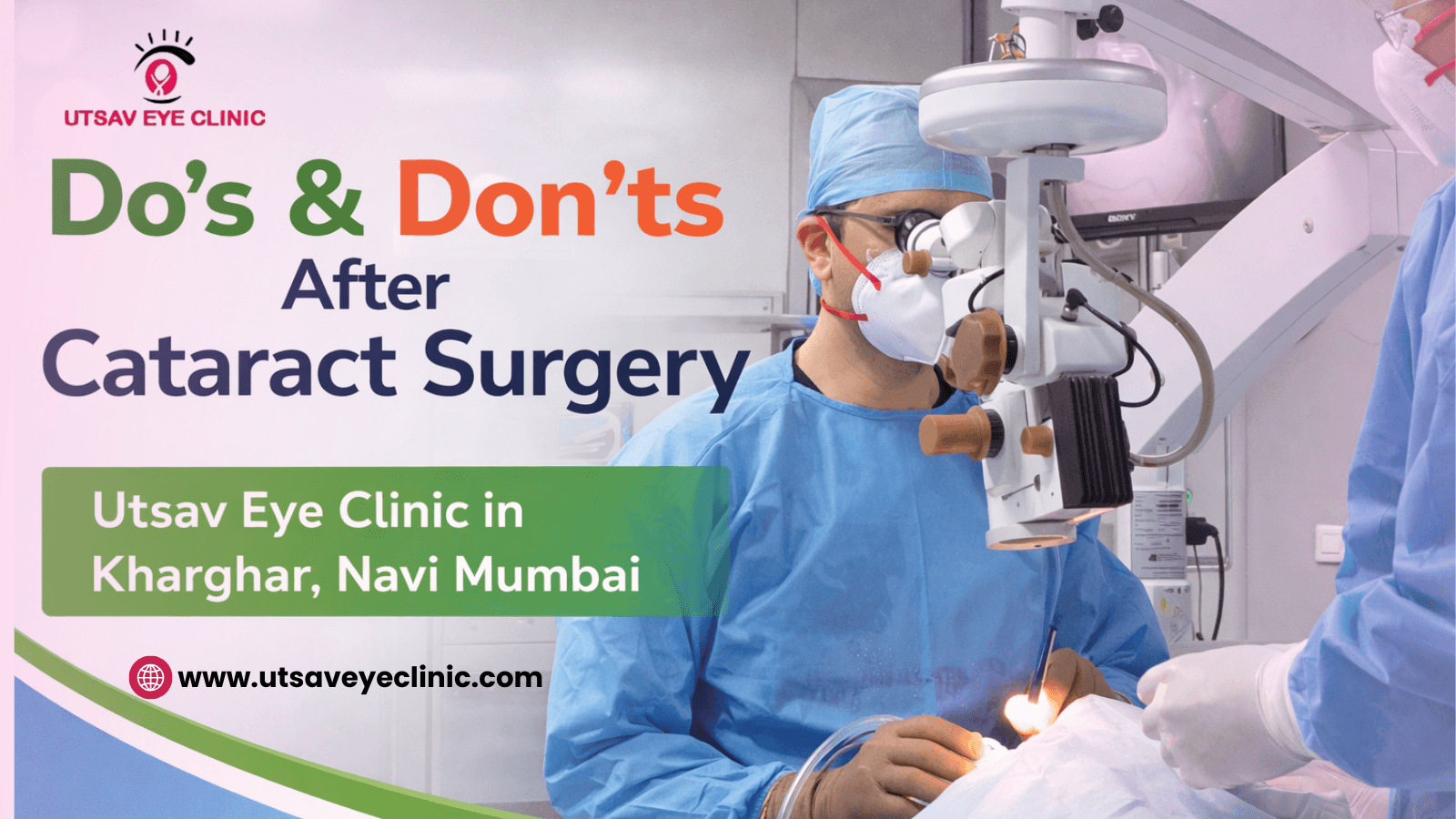
If you have recently had cataract surgery or are planning for it, taking proper care of your eyes afterward is very important. Good aftercare helps your eyes heal faster, improves your vision, and reduces the chances of any complications.
If you are planning Cataract surgery in Kharghar, following the right precautions after the procedure can make your recovery smooth and comfortable. Even though the surgery is simple and safe, your eyes still need time and care to fully recover.
What to Expect After Cataract Surgery
After the procedure, you may notice slight irritation, blurry vision, or mild redness. These are common and usually improve within a few days. Most people experience better vision soon after surgery, but complete healing may take a few weeks. Your doctor may advise you to wear protective glasses and avoid certain activities for a few days. Regular visits to an eye specialist in Navi Mumbai can help ensure that your eyes are healing properly and everything is on track.
Do Follow Your Doctor’s Instructions After Cataract Surgery in Kharghar, Navi Mumbai
Your doctor will prescribe eye drops and medications to prevent infection and control swelling. It is important to use them exactly as instructed.
Patients who undergo Cataract surgery in Navi Mumbai are usually given a proper schedule for medications. Following this routine carefully supports faster healing. Even if your eyes feel better, do not stop using the medicines unless your doctor tells you to.
Keep Your Eyes Safe; Avoid Rubbing or Touching Them After Surgery
After surgery, your eyes are more sensitive than usual. Even if you feel mild itching or discomfort, avoid rubbing or touching your eyes. Doing so can delay healing or increase the risk of infection. To protect your eyes, wear sunglasses when stepping outside and try to avoid dusty or polluted areas. If you feel any unusual discomfort, it is better to consult an experienced eye specialist in Navi Mumbai instead of touching your eyes.
Do Wear Sunglasses; Don’t Expose Your Eyes to Dust
Your eyes can be more sensitive to light and environmental factors after surgery. Wearing sunglasses helps protect them from sunlight, dust, and pollution. If you have had Cataract surgery in Kharghar, using protective eyewear regularly when going outside can help prevent irritation and support the healing process.
Do Keep Your Eyes Clean; Don’t Let Water Enter Your Eyes
Maintaining cleanliness around your eyes is very important after surgery. You can gently clean the area around your eyes, but avoid touching the eye directly. While bathing or washing your face, make sure that water, soap, or shampoo does not enter your eyes, as this can lead to infection.
Don’t Sleep on the Operated Side Immediately After Surgery
Sleeping position also plays a role in your recovery. Avoid lying on the side where the surgery was performed, as it can put pressure on your eye. It is better to sleep on your back or the opposite side for a few days. If you experience discomfort while sleeping, you can consult your doctor for proper advice.
Do Attend Follow-Ups; Don’t Skip Check-Ups
Follow-up appointments are important to monitor your recovery. Your doctor will check your eye and make sure everything is healing as expected. Even if your vision seems fine, do not skip these visits. Regular check-ups help prevent any issues and ensure a smooth recovery.
When Should You Contact Your Doctor?
Although recovery is usually smooth, you should contact your doctor if you notice:
- Severe or increasing eye pain
- Sudden drop in vision
- Persistent redness
- Flashes or floating spots
If you experience any of these symptoms after Cataract surgery in Navi Mumbai, seek medical help without delay.
Final Thoughts
Cataract surgery is a safe and effective procedure, but proper care after surgery is equally important. By following these simple do’s and don’ts, you can recover faster and enjoy better vision.
For the best results, always follow expert advice and choose a reliable clinic for your treatment and aftercare. Under the care of Dr. Anand Kumar, patients receive the right guidance and support needed for a smooth recovery. If you are looking for trusted eye care and professional support, choosing the right clinic can make a big difference in your overall experience.
More
By Andy
02 Mar, 2026
Uncategorized
#ChildVisionCare, #EyeHealthTips, #EyePatching, #LazyEyeTreatment, #NaviMumbai, #VisionImprovement, Amblyopia, kharghar, LazyEye, PediatricOphthalmology
If your child has been diagnosed with lazy eye, it is natural to feel worried. Eye patching for lazy eye. Eye patching is one of the most common treatments recommended by doctors. But what exactly does it involve? How long should your child wear the patch, and how effective is it? If you are searching for amblyopia (lazy eyes) in Navi Mumbai or trusted lazy eyes Treatment in Kharghar, this guide will explain everything in a simple, easy-to-understand way.
What Is Lazy Eye (Amblyopia)?
Lazy eye, also called amblyopia, occurs when one eye develops weaker vision than the other. The brain may start relying more on the stronger eye, which keeps the weaker eye from developing properly.
Even if the weaker eye looks normal, its vision may not be strong.
If untreated, lazy eye can cause:
- Permanent loss of vision in the weaker eye
- Difficulty judging distances
- Trouble reading or learning
- Higher risk if the stronger eye gets injured later
Early treatment works best. Parents concerned about Amblyopia lazy eyes Navi Mumbai can see significant improvements when treatment begins early.
Learn more about treatment options at Amblyopia Treatment in Navi Mumbai.
How Does Eye Patching Work?
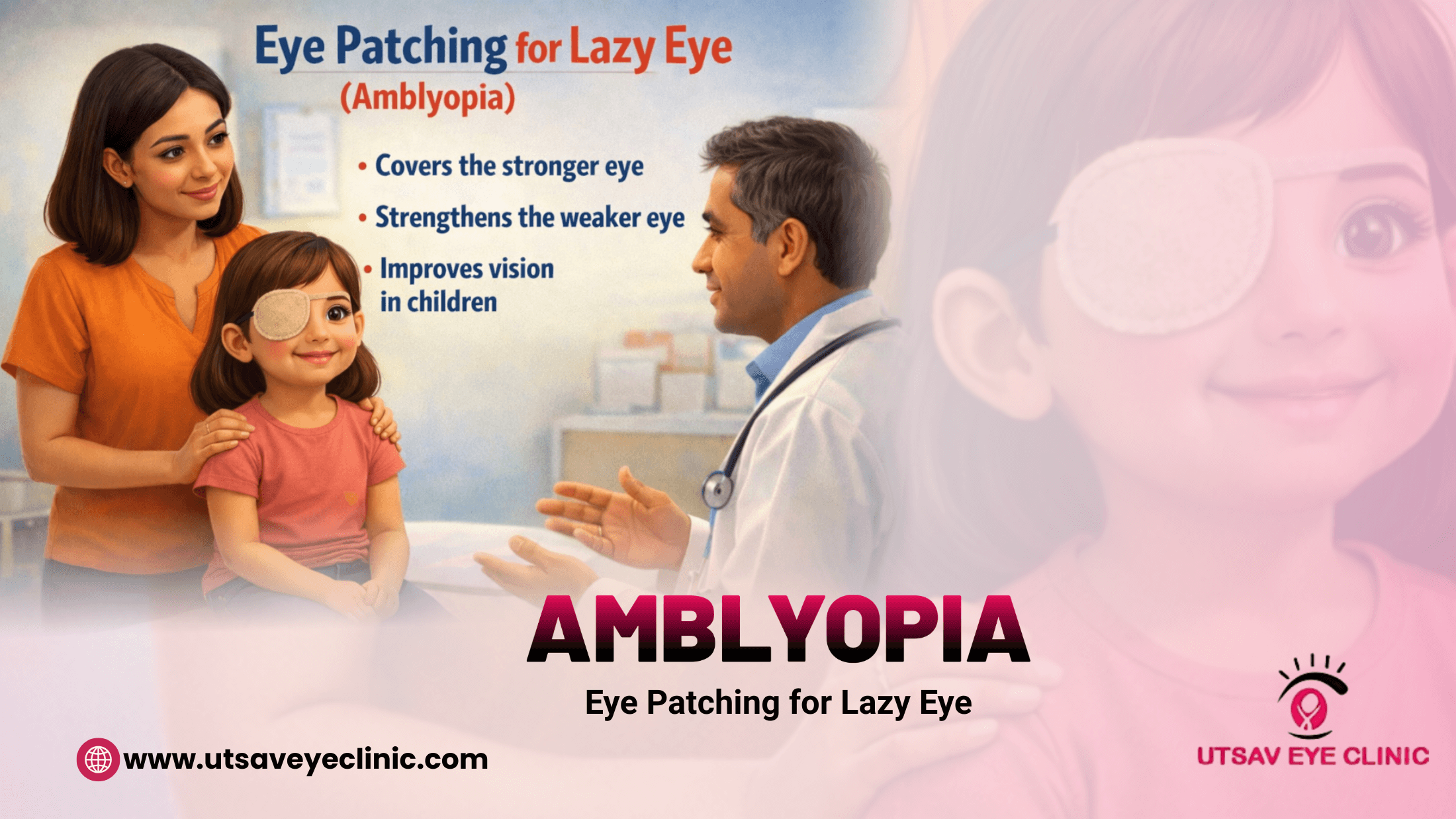
Eye patching helps the weaker eye develop by limiting the use of the stronger eye.
Here is how it works:
- Cover the stronger eye with a patch
- Encourage the weaker eye to work harder and develop better vision
- Over time, the weaker eye becomes stronger and more coordinated
Think of it like exercising a weak muscle consistent use strengthens it.
You can also consult a Pediatric Eye Specialist in Navi Mumbai for guidance on lazy eyes Treatment in Kharghar.
Recommended Duration for Wearing an Eye Patch
The time your child needs to wear the patch depends on:
- Age of the child
- How severe the lazy eye is
- Cause of the problem
Mild cases often need 2 hours per day, while moderate or severe cases may require 4–6 hours daily. Some children may need treatment for a few months, while others may continue for 1–2 years. Regular checkups are important to track improvement safely.
Parents searching for Amblyopia lazy eyes Navi Mumbai should follow the doctor’s schedule carefully, as more hours do not always mean faster improvement. For additional guidance, you can check Eye Patching for Lazy Eye Treatment.
What Is the Success Rate of Eye Patching?
Eye patching is highly effective, especially when started early.
Studies show:
- 70–90% of children with mild to moderate lazy eye improve
- Best results occur if treatment starts before age 7–8
Older children can still benefit, but progress may take longer. Families planning lazy eyes Treatment in Kharghar achieves the best outcomes with early intervention.
Monitoring ensures safe results for children with Amblyopia, lazy eyes Navi Mumbai.
Are There Any Side Effects?
Eye patching is generally safe, but minor issues may occur:
- Skin irritation from adhesive patches
- Initial frustration or discomfort
- Temporary difficulty with tasks like writing or walking
These effects are usually short-term and disappear with time. Serious complications are rare. Regular follow-ups are important for children with Amblyopia lazy eyes, Navi Mumbai.
Tips to Help Your Child Adjust to Eye Patching
Consistency is key for successful lazy eye treatment in Kharghar. Here are some tips:
- Let your child choose fun or colorful patches
- Schedule patching during activities they enjoy
- Use reward charts or small incentives
- Encourage reading, drawing, or puzzles while patching
- Be patient and positive
Can Lazy Eye Be Treated Without Patching?
Some children may benefit from glasses, vision therapy, or atropine drops. However, for most children with amblyopia (lazy eyes) in Navi Mumbai, patching remains the most effective treatment. A complete eye exam helps determine the best plan for your child.
When Should You Consult a Specialist?
You should see an eye specialist if your child:
- Often squints or covers one eye
- Has noticeable eye misalignment
- Struggles with reading
- Tilts their head while watching TV
- Has a family history of lazy eye
Early detection ensures better outcomes. Families searching for Amblyopia, lazy eyes Navi Mumbai and considering lazy eyes Treatment in Kharghar should act promptly.
Final Thoughts
Eye patching for lazy eye may seem simple but is very effective. It strengthens the weaker eye, improves vision, and prevents long-term vision problems.
For parents exploring lazy eye treatment in Kharghar, taking early action and following a professional plan can make a lasting difference. Children with Amblyopia lazy eyes Navi Mumbai can achieve better vision and greater confidence in their daily activities.
More
By Andy
23 Oct, 2014
Children Eye Care, Comprehensive Ophthalmology
Airoli, astigmatism, axis, CBD Belapur, cylinder, diopters, farsightedness, glasses, hyperopia, India, Kalamboli, Kamothe, kharghar, Mansarovar, myopia, navi mumbai, Nerul, New Panvel, Panvel, prescription, Sanpada, Seawoods, shortsightedness, spectacles, Vashi
Learn about your Glasses prescription
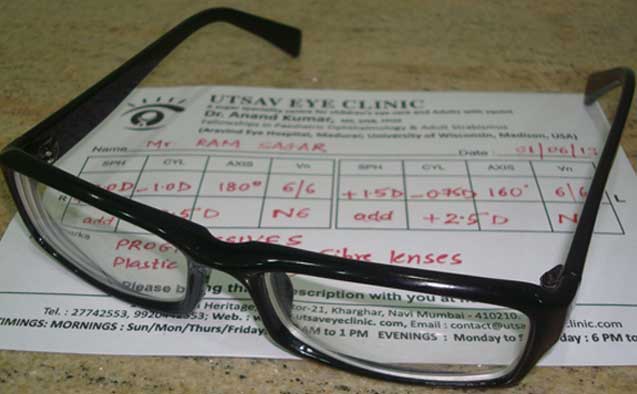
Glass prescription can be difficult to understand, especially when no one else in the family has worn glasses before. Most patients are puzzled by the ‘signs’ and ‘numbers’ on the glass prescription and would want to ask a lot of questions regarding it to the doctor, but are either too “shy” or they are gently “shoved out” of the consulting room for want of the doctor’s time.
This post will tell you most of the things that you need to know about your glass prescription.
But before that, let us review the common refractive error conditions.
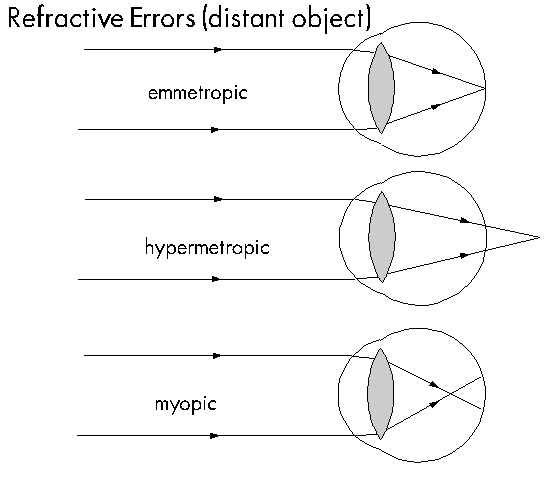 Farsightedness (Hyperopia)
Farsightedness, or hyperopia, as it is medically termed, is a vision condition in which distant objects are usually seen clearly, but close ones do not come into proper focus. Farsightedness occurs if your eyeball is too short or the cornea has too little curvature, so light entering your eye is not focused correctly.
Nearsightedness (Myopia)
Nearsightedness, or myopia, as it is medically termed, is a vision condition in which close objects are seen clearly, but objects farther away appear blurred. Nearsightedness occurs if the eyeball is too long or the cornea, the clear front cover of the eye, has too much curvature. As a result, the light entering the eye isn’t focused correctly and distant objects look blurred.
Astigmatism
Astigmatism is a vision condition that causes blurred vision due either to the irregular shape of the cornea, the clear front cover of the eye, or sometimes the curvature of the lens inside the eye. An irregular shaped cornea or lens prevents light from focusing properly on the retina, the light sensitive surface at the back of the eye. As a result, vision becomes blurred at any distance.
Sphere
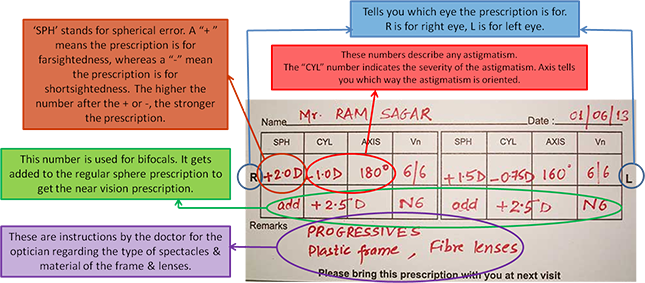
Sphere, often abbreviated as “sph” is the spherical refractive error, or nearsightedness or farsightedness. The first part of this number will be a plus or minus sign:
+ : farsighted, or longsighted prescription: hyperopia.
– : nearsighted, or shortsighted prescription: myopia.
0, Pl, or Plano : no error
How bad is the spherical prescription?
The number is in “diopters” but you don’t need to know too much about that, it’s a measure of how much the curvature of the eye is off from normal. Basically, the higher the number (ignoring the plus or minus), the worse the prescription.
Myopia (-)
0.00 to -3.00 : mild myopia
-3.00 to -6.00 : moderate myopia
-6.00 and higher : high myopia
Hyperopia (+)
0.00 to +2.25 : mild hyperopia
+2.25 to +5.00 : moderate hyperopia
+5.00 and higher : high hyperopia
Cylinder
Cylinder is the measure of astigmatism. Astigmatism is when there’s an irregular shape to the cornea, often described as a football shape. It causes blurriness at any distance. There are two measurements that go along with astigmatism, the first, cylinder, is a measure of how severe the astigmatism is.
How bad is the cylinder prescription?
Like the spherical error, the cylinder number is measured in diopters. The thing you want to pay attention to is the number. It may be written as a plus or a minus, but that doesn’t actually make any difference in how bad the prescription is. The higher the number after the plus or minus, the more severe the astigmatism.
0.00 to 1.00 : mild astigmatism
1.00 to 3.00 : moderate astigmatism
higher than 3.00 : severe astigmatism
Axis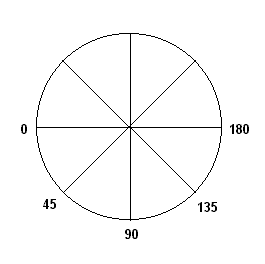
The axis tells you which way the astigmatism is oriented on your child’s eye
If you think of astigmatism as a football shape, it makes sense that the football might be turned any direction. The axis number then, tells you the orientation of the astigmatism. The number is in degrees, it doesn’t have anything to do with how severe the astigmatism is, just how it is situated on your or your child’s eye.
Add
If you or your child needs bifocals, you will likely see a number here. This tells you how the prescription should be changed for close up. Let’s say your child has a regular glasses prescription of +3.00, if the add number is +1.00, then the near distance prescription will be +3.00 + 1.00, which equals +4.00 (3+1=4). In the same vein, if your child is nearsighted, say -4.00, but has an add of +2.00, then the near distance part of the bifocals will have a prescription of -4.00 + 2.00, which equals -2.00.
Sometimes, you don’t have an “Add” part of the prescription, and instead you’ll just see a prescriptions for distance vision and a separate prescription for near vision.
Hope you got to learn something about your Glasses prescription. Please click on the LIKE button below to help your friends also read this.
Please do not hesitate to contact us for any queries or feedback.
Adapted from littlefoureyes
More
By Andy
23 Oct, 2014
Children Eye Care, Uncategorized
Airoli, CBD Belapur, child eye doctor, child eye specialist, children, children eye doctor, children eye specialist, far-sightedness, glasses, hypermetropia, hyperopia, India, Kalamboli, Kamothe, kharghar, Mansarovar, myopia, navi mumbai, Nerul, New Panvel, Panvel, Sanpada, Seawoods, short-sightedness
Getting the glasses to stay on
Many Eye specialist doctors will tell you that once your child realizes that they see better with their glasses, they’ll be much more likely to leave them on, and even ask for them first thing in the morning. And that’s true, but the trick is getting through that initial stage when they don’t want these funny things sitting on their face.
Every child is different, some will take to their glasses immediately, while others fight tooth and nail for months. A recent poll shows that about 65% children were wearing them well in a week or less, but more than 15% of the kids take longer than a month before they’ll wear them reliably. Odds are your child will surprise you and take to their glasses quickly, but if they don’t, know that you’r not alone in your struggles.
While there are a lot of strategies to get your child to leave their glasses on, the key seems to be to stay calm and positive (which is easier said than done) and consistent about keeping them on (ok, this is also easier said than done). When your child takes them off, put them back on with a smile, but don’t make a big deal about it. If they are really fighting or upset, set the glasses to the side for a few minutes until your child calms down and try again. You’ll also want to have activities on hand when you put those glasses on. Boredom and glasses do not mix!
The following strategies have been suggested by parents of our kid patients who needed to wear glasses. They may help you in your struggle to make your children keep on their glasses too.
- Talk about how nice he or she looks in the glasses.
- When putting glasses on your child, do it with a smile. “While we were trying glasses on Palak, she was crying and we were getting upset, too, and we kept apologizing to her. Dr. Kumar recommended that instead, we show her how happy we are when we put glasses on her (even when we aren’t). It didn’t completely stop her crying, but she definitely calmed down a notch once we started acting happier” says Mrs. Shah, the mother of a 7 year cheerful girl residing in Kharghar.

- Show them glasses-wearing characters (like Arthur, or Harry Potter for older kids). This helps them accept the glasses by making them less self-conscious.
- If your child keeps taking off their glasses, simply put them back on with a smile. If they don’t let you put them on, don’t make a big deal, simply set them aside and try again in a few minutes. “It took about 2 weeks for Zeeshan to get to a point where he leaves the glasses on most of the time” says Mrs. Chaudhary, a resident of Nerul, Navi Mumbai.
- Most kids, especially teenagers are conscious about their looks particularly in front of their school mates. Hence it may be a good idea to speak to the class teachers and close friends and ask them to appreciate the child’s new look.

- When she put on her pair of glasses, I rewarded her with her favorite cookies and explained that each times she wears her glasses we’ll show her how proud we are by giving her a cookie. She seems motivated by this and put them on 4 more times before dinner.
- Take off your child’s glasses when they’re in the car – at least at the beginning. It’s likely they’ll take off their glasses and throw them somewhere where they might fall out of the car or get smushed when you open the door.
- Mrs. Tawade of New Panvel thinks the reward system works best for most kids. She says “We bribed him with a new Thomas toy if he would put them on and leave them alone, so he did, and Daddy let him pick out the most expensive Thomas set that the store had.”
We wish you the best in your efforts to make your child keep their glasses on. If you have any strategy that has worked for you, kindly share it with us for the benefit of other parents.
More