By Andy
23 Oct, 2014
Children Eye Care, Uncategorized
Airoli, CBD Belapur, child eye doctor, child eye specialist, children, children eye doctor, children eye specialist, far-sightedness, glasses, hypermetropia, hyperopia, India, Kalamboli, Kamothe, kharghar, Mansarovar, myopia, navi mumbai, Nerul, New Panvel, Panvel, Sanpada, Seawoods, short-sightedness
Getting the glasses to stay on
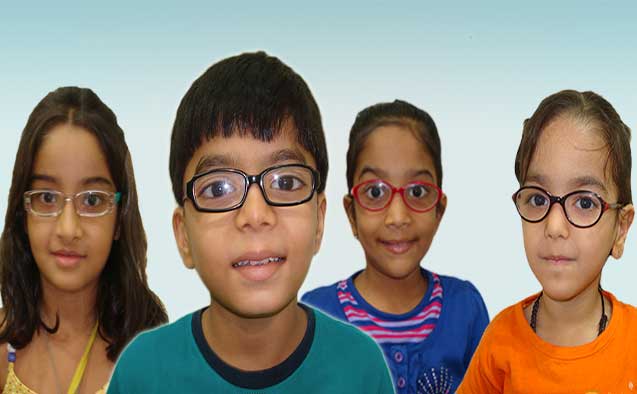
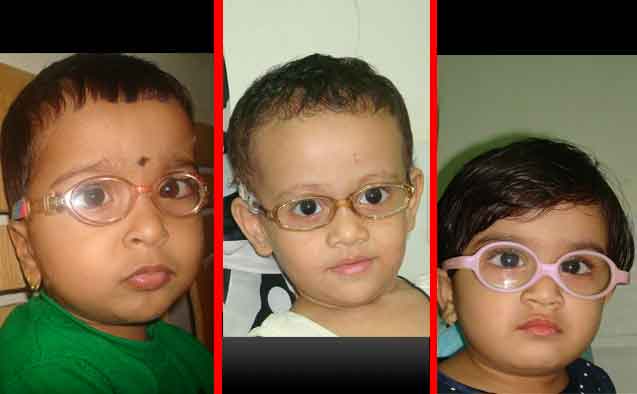
Many Eye specialist doctors will tell you that once your child realizes that they see better with their glasses, they’ll be much more likely to leave them on, and even ask for them first thing in the morning. And that’s true, but the trick is getting through that initial stage when they don’t want these funny things sitting on their face.
Every child is different, some will take to their glasses immediately, while others fight tooth and nail for months. A recent poll shows that about 65% children were wearing them well in a week or less, but more than 15% of the kids take longer than a month before they’ll wear them reliably. Odds are your child will surprise you and take to their glasses quickly, but if they don’t, know that you’r not alone in your struggles.
While there are a lot of strategies to get your child to leave their glasses on, the key seems to be to stay calm and positive (which is easier said than done) and consistent about keeping them on (ok, this is also easier said than done). When your child takes them off, put them back on with a smile, but don’t make a big deal about it. If they are really fighting or upset, set the glasses to the side for a few minutes until your child calms down and try again. You’ll also want to have activities on hand when you put those glasses on. Boredom and glasses do not mix!
The following strategies have been suggested by parents of our kid patients who needed to wear glasses. They may help you in your struggle to make your children keep on their glasses too.
- Talk about how nice he or she looks in the glasses.
- When putting glasses on your child, do it with a smile. “While we were trying glasses on Palak, she was crying and we were getting upset, too, and we kept apologizing to her. Dr. Kumar recommended that instead, we show her how happy we are when we put glasses on her (even when we aren’t). It didn’t completely stop her crying, but she definitely calmed down a notch once we started acting happier” says Mrs. Shah, the mother of a 7 year cheerful girl residing in Kharghar.

- Show them glasses-wearing characters (like Arthur, or Harry Potter for older kids). This helps them accept the glasses by making them less self-conscious.
- If your child keeps taking off their glasses, simply put them back on with a smile. If they don’t let you put them on, don’t make a big deal, simply set them aside and try again in a few minutes. “It took about 2 weeks for Zeeshan to get to a point where he leaves the glasses on most of the time” says Mrs. Chaudhary, a resident of Nerul, Navi Mumbai.
- Most kids, especially teenagers are conscious about their looks particularly in front of their school mates. Hence it may be a good idea to speak to the class teachers and close friends and ask them to appreciate the child’s new look.

- When she put on her pair of glasses, I rewarded her with her favorite cookies and explained that each times she wears her glasses we’ll show her how proud we are by giving her a cookie. She seems motivated by this and put them on 4 more times before dinner.
- Take off your child’s glasses when they’re in the car – at least at the beginning. It’s likely they’ll take off their glasses and throw them somewhere where they might fall out of the car or get smushed when you open the door.
- Mrs. Tawade of New Panvel thinks the reward system works best for most kids. She says “We bribed him with a new Thomas toy if he would put them on and leave them alone, so he did, and Daddy let him pick out the most expensive Thomas set that the store had.”
We wish you the best in your efforts to make your child keep their glasses on. If you have any strategy that has worked for you, kindly share it with us for the benefit of other parents.
More
Why do I need to see a Paediatric Eye Doctor in Navi Mumbai?
The American Academy of Paediatrics states that “Children are not just small adults. They cannot always say what is bothering them. They cannot always answer medical questions, and are not always able to be patient and cooperative during a medical examination.” The examination techniques used to examine the eyes in adults do not work well with kids. Paediatric Eye Doctor in Navi Mumbai.
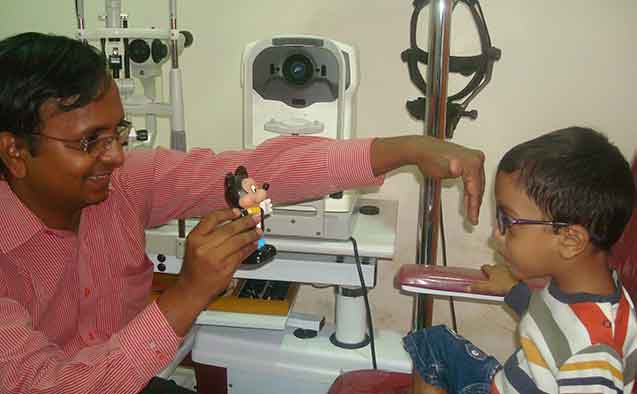
 Paediatric ophthalmologists (Children Eye Care doctors or Paediatric Eye doctors) know how to examine and treat children in a way that makes them relaxed and cooperative. In addition, paediatric ophthalmologists use equipment specially designed for children. Most paediatric ophthalmologists’ clinics are arranged and decorated with children in mind. This helps create a comfortable and joyful environment for your child. Our examination room at Utsav Eye Clinic, Kharghar, Navi Mumbai are child-friendly and are designed to make your child relaxed while we conduct the eye examination in a breeze. Dr Kumar of Utsav Eye Clinic is one of the few fellowship trained Paediatric Eye Doctor in Navi Mumbai.
Paediatric ophthalmologists are medical doctors who have had
• Four and half years of medical school (MBBS)
• One year of medical or surgical internship
• Three additional years of residency training in ophthalmology (MS)
• One and half additional year of fellowship training in paediatric ophthalmology (FPOS)
• Dr. Anand Kumar has also undergone an advanced fellowship training at the University of Wisconsin, Madison, USA in speciality of paediatric ophthalmology and strabismus (FPOS).
Paediatric Eye Doctors have expertise to treat the following eye conditions:
- Amblyopia (lazy eye)
- Blocked tear ducts
- Cataracts
- Conditions requiring oculoplastic surgery
- Conditions requiring vision therapy evaluation
- Congenital cranial dysinnervation disorders
- Eye tumors
- Hemangiomas and lymphangiomas of the eye and orbit
- Infections and inflammations of the eye and orbit
- Neuro-ophthalmological conditions
- Pediatric corneal disease
- Pediatric / juvenile glaucoma
- Ptosis (droopy eyelids)
- Refractive errors (glasses in children)
- Retina disorders that lead to vision loss
- Retinoblastoma
- Retinopathy of prematurity
- Strabismus (misaligned or crossed eyes)
- Strabismus caused by thyroid disease, stroke, injuries and cancer
- Strabismus in adults
- Tearing eyes
- Traumatic eye injuries
To know more about our Child Eye care and squint specialist at Utsav Eye Clinic, Kharghar click here.
More
Glasses in children
Having trouble selecting the “right” glasses for your kids?
Read these tips before making up your mind.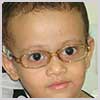
- It is especially important for children’s eyeglasses to stay in place, because when eyeglasses slide down the nose, kids tend to look over the tops of the lenses instead of pushing them back up where they belong.
-
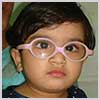 Plastic or Metal Eyeglass Frames?
Plastic used to be and still is the recommended material for kids’ glasses. It is considered to be more flexible, yet sturdier, and the perfect choice for frames on an active child. Though metal eyeglass frames, or “wire frames” as they are often called, have gotten a bad rap in the past, today’s glasses are made tough to handle the abuse that children give them. There are several types of metal eyeglass frames for kids, including Monel, Stainless Steel, Aluminum, Nickel Silver, and Titanium. These metals can be formed into stylish, yet lightweight frames. In order to properly choose the best temples for your kid’s glasses, the temples should actually wrap around their ears.
- And finally, if your child needs to wear eyeglasses all the time to see, it would be a good idea to check into purchasing a second pair to use as a spare.
When in doubt about a frame’s fit, do not hesitate to consult the optician.
They would be able to answer your queries regarding glasses in children.
More
Follow these tips to ensure healthy eyes for your children.
 1. Diet: A normal balanced diet comprising of red and green leafy vegetables like spinach, carrots, beetroot and yellow fruits including mango and papaya which are rich in carotene (A precursor of Vitamin A) should be consumed by children for healthy eyes.
2. TV Viewing: Television should be watched at a proper viewing distance of 3.5 meter or more in a well-lighted room. The bigger the TV, the further away your child should sit.
 3. Computer Usage: the child should be encouraged to use it judiciously in order to reduce eye fatigue. Computer screen should be slightly lower than the eye level. Encourage your child to take a break after 30-40 minutes of near work such as reading, writing or computer work. Your child should look at distant objects for 3 to 5 minutes. They could look out of the window into the distance.
4. Playing games on the mobile: phones should be restricted because of the less form factor and the resolution.
5. Lighting: One should have a light source behind or from the side while studying. Books should be held at about 14 inches distance.
6. Outdoor activities: Protective eye wear is recommended for children involved in contact sports. Encourage children to spend more time on outdoor activities like ball games, walks in the park or a family picnic at the beach, as there is emerging evidence that outdoor activities may delay the onset or progression of myopia in your child.
8. Allergic Conjunctivitis is frequently seen in school age, children should be discouraged from rubbing their eyes since it aggravates the allergic process, In addition, due vigilance has to be paid to eye hygiene. Children should not touch their eyes with dirty hands
9. Certain practices like application of Kajal to new-borns and washing eyes with rosewater is an absolute NO-NO.
10. Take your child for eye checkups yearly
Click here to Read more about Utsav Eye Clinic.
More