
Cataract in Children: How Is It Different from Adult Cataract? Understand Symptoms and Get Expert Treatment at Utsav Eye Clinic in Kharghar
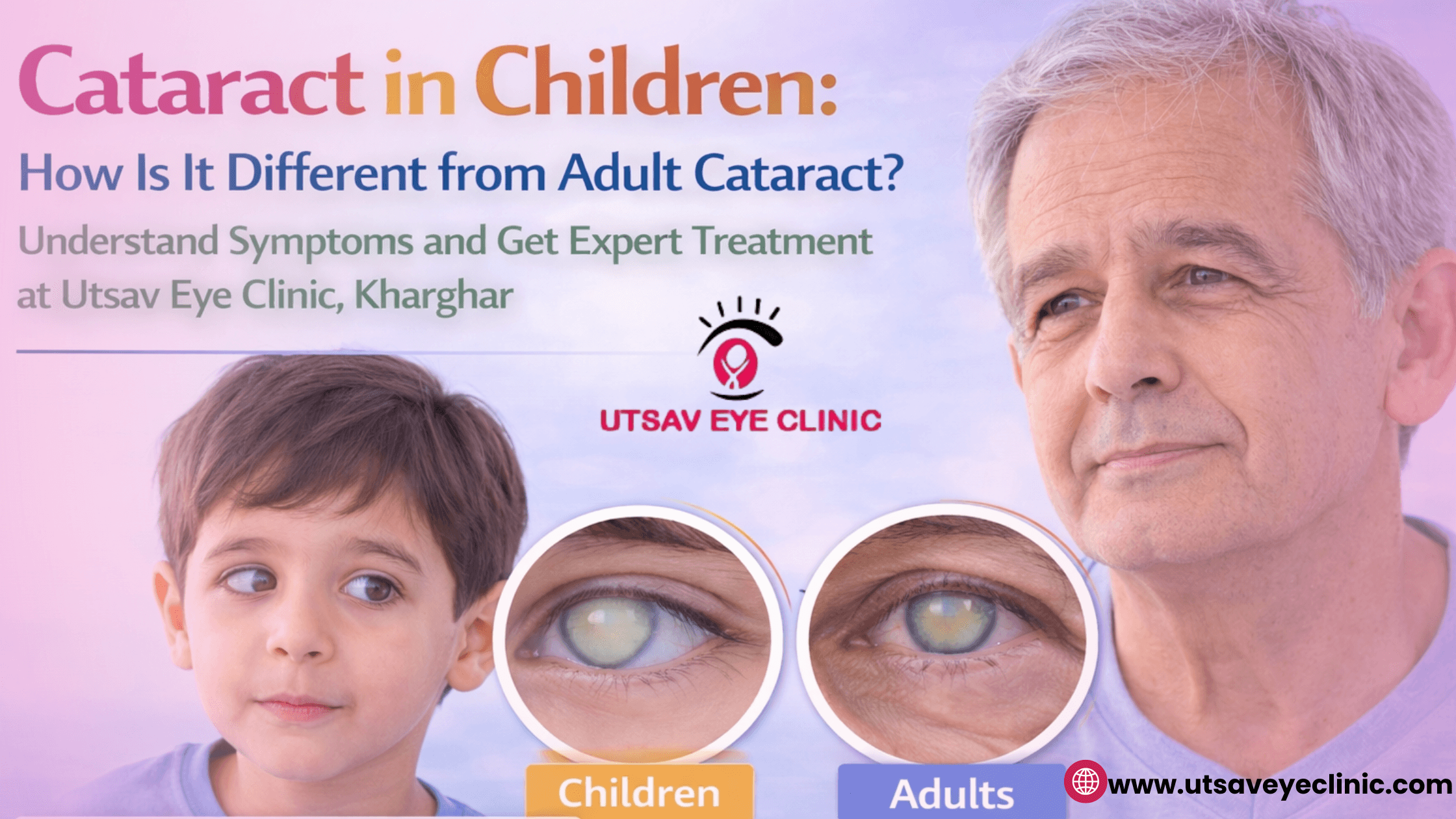
Cataract is often considered an age-related eye condition, but it can also affect children. When it occurs in early life, it becomes more serious because it can interfere with normal vision development. Families searching for Cataract in Children in Navi Mumbai often look for early diagnosis and specialized pediatric eye care to protect a child’s vision at the right stage of development.
Unlike adults, children rely heavily on clear vision for learning, coordination, and brain development. Even a short delay in treatment can have long-term effects on eyesight, making early detection extremely important.
What Is Cataract in Children?
Cataract in children is a condition where the natural lens of the eye becomes cloudy during infancy or early childhood. It may be present at birth (congenital) or develop later due to genetic or medical causes.
Early paediatric cataract care in Kharghar is very important because a child’s eyes and brain are still developing together. Any obstruction in vision can affect how the brain learns to interpret images, which may lead to long-term visual issues if not treated early.
What Is Adult Cataract?
Adult cataract is mainly an age-related condition that develops slowly over time, usually after the age of 50. In adults, the lens becomes cloudy gradually, leading to reduced clarity of vision. However, since the visual system is already fully developed, cataracts mainly affect day-to-day vision quality rather than visual growth or development.
Cataract in Children vs Adult Cataract: Key Differences
Cataract in Children vs Adult Cataract: Key Differences
- Age of Onset:
Children: May be present at birth or early childhood
Adults: Usually after 50 years - Causes:
Children: Genetic conditions, infections during pregnancy, eye injury, or metabolic disorders
Adults: Aging, diabetes, long-term UV exposure - Symptoms:
Children: White pupil, squinting, poor tracking, lack of visual response
Adults: Blurry vision, glare, faded colors, difficulty reading - Treatment Urgency:
Children: Requires early treatment to prevent permanent vision damage
Adults: Depends on severity and lifestyle impact - Effect on Vision:
Children: Affects vision development and brain-eye connection
Adults: Affects clarity of vision only - Recovery Process:
Children: Requires long-term follow-up and visual rehabilitation
Adults: Faster recovery after surgery - Long-Term Care:
Children: Continuous monitoring for proper vision development
Adults: Routine eye check-ups for maintaining vision
How Cataracts Affect Vision in Children and Adults
In children, cataracts can block clear visual input during a critical stage of brain development. This prevents proper formation of visual pathways, which can lead to conditions like amblyopia (lazy eye) if not treated early. That is why child eye cataract treatment should never be delayed.
In adults, cataracts mainly cause gradual blurring of vision, glare from lights, and difficulty in night vision. However, they do not affect how the brain processes vision because the visual system is already developed.
Symptoms in Children
- White or cloudy appearance in the pupil
- Difficulty focusing on objects or faces
- Poor eye tracking or delayed response
- Squinting or eye misalignment
- Sensitivity to bright light
- Reduced visual attention
Symptoms in Adults
- Gradual blurred vision
- Difficulty seeing at night or in dim light
- Glare or halos around lights
- Faded or yellowish colors
- Frequent change in glasses prescription
Causes in Children
- Genetic or inherited conditions
- Infections during pregnancy
- Eye trauma or injury
- Metabolic or systemic disorders
- In some cases, no clear cause is identified
How Cataract Is Diagnosed in Children
Doctors use detailed eye examinations to detect cataracts in children. This includes pupil reflex testing, lens examination, and observation of how the child responds to visual stimuli.
A pediatric eye specialist in Kharghar also checks eye alignment, movement, and tracking ability to understand how much vision is affected and plan treatment accordingly.
Why Early Treatment Matters
Early treatment is very important because a child’s vision develops rapidly in the first few years of life. Any delay can interrupt normal brain-eye coordination and lead to permanent vision problems.
Timely care helps prevent complications like lazy eye, poor depth perception, and long-term visual impairment. Early intervention gives the best chance for normal vision development.
Why Choose Utsav Eye Clinic in Kharghar
For families looking for trusted cataract treatment in Kharghar, Utsav Eye Clinic provides advanced diagnostic tools, expert pediatric care, and personalised treatment planning. The clinic focuses on early detection, accurate evaluation, and long-term vision support to ensure the best outcomes for children’s eye health.
Conclusion
Cataracts in children are very different from adult cataracts because they affect vision development rather than just clarity. While adult cataracts mainly impact daily vision quality, childhood cataracts can have lifelong consequences if not treated early. Early diagnosis, timely treatment, and expert care are essential to protect a child’s eyesight and ensure healthy visual growth.
For expert evaluation and treatment, parents can consult Utsav Eye Clinic, Kharghar, under the care of Dr. Anand Kumar, for specialized pediatric eye care and advanced cataract management.
More
