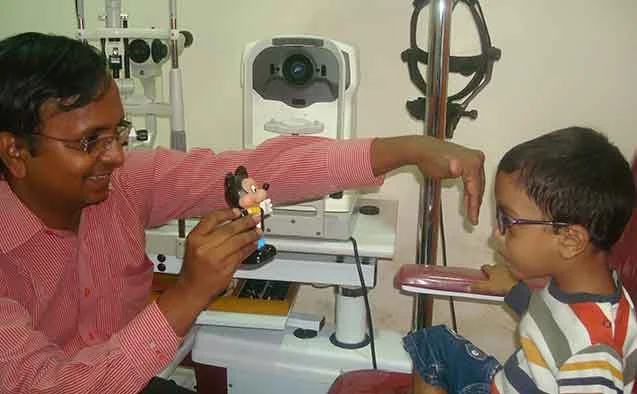

Squint Surgery vs. Non-Surgical Treatment: Which Is Right?
Welcome to Utsav Eye Clinic's guide on Squint Surgery vs. Non-Surgical Treatment: Which Is Right?. Led by Dr. Anand Kumar, our clinic provides advanced squint surgery in Navi Mumbai to help patients maintain clear, comfortable vision. Call us at 022 35569270.
Understanding Strabismus (Squint) Treatment Goals
Strabismus, commonly known as a squint, is a misalignment of the eyes where they do not look in the same direction. When evaluating treatment options, the goals are threefold: to restore binocular vision (coordination between the eyes), to prevent or treat lazy eye (amblyopia), and to achieve aesthetic alignment. Deciding between surgical and non-surgical treatment depends entirely on the cause of the squint, its direction (inward or outward), and the patient's age. A comprehensive evaluation by an expert squint specialist at Utsav Eye Clinic will determine the best path forward.
Non-Surgical Treatments: When Do They Work?
Non-surgical treatments are always the first line of defense for certain types of squints, and in some cases, they can fully resolve the misalignment. These options include:
• Corrective Eyeglasses: In cases of accommodative esotropia, an inward turning of the eyes caused by extreme farsightedness, wearing prescription glasses relaxes the eye's focusing effort and completely straightens the gaze.
• Patching (Occlusion): Covering the stronger eye to build strength and visual acuity in the misaligned, weaker eye (amblyopia therapy).
• Prism Lenses: Special wedge-shaped lenses that redirect light rays, neutralizing double vision (diplopia) for patients with minor muscle misalignments.
• Vision Therapy: Structured eye exercises designed to improve binocular coordination and strengthen eye muscles, particularly effective for convergence insufficiency.
When is Squint Surgery Necessary?
If a squint cannot be corrected by glasses or exercises, surgical intervention is required. Surgery is typically necessary for squints present since infancy (like infantile esotropia), large-angle outward drifts (exotropia), or cases where muscle weakness is structural. Squint surgery is not performed on the eye globe itself; rather, it involves adjusting the tension of the small muscles on the outside of the eye to align the visual axes. Delaying surgery in children can lead to permanent loss of 3D depth perception and amblyopia.
How Squint Surgery is Performed
Squint surgery is a safe, stitchless daycare procedure. The surgeon makes a tiny incision in the conjunctiva (the clear membrane covering the white of the eye). The target muscle is identified and either weakened (recessed, by moving it further back on the eye) or strengthened (resected, by shortening it) to achieve alignment. At Utsav Eye Clinic, Dr. Anand Kumar uses advanced micro-incision techniques, ensuring rapid healing, minimal discomfort, and scarless outcomes. For adults, adjustable suture techniques can be used to fine-tune the muscle alignment after surgery.
Comparing Outcomes and Choosing the Right Path
Both surgical and non-surgical treatments have excellent success rates when applied to the correct indications. Glasses and patching are vital for visual development, while surgery is unmatched for mechanical realignment. In many cases, a combination of both is used—for example, performing surgery to align the eyes, followed by patching to treat residual lazy eye. Early diagnosis ensures the best visual outcomes.
Frequently Asked Questions (FAQ)
Can squint surgery be avoided with eye exercises?
Only for specific types of squint like convergence insufficiency. For structural squints, infant-onset squints, or large muscle imbalances, exercises cannot straighten the eyes, and surgery is required.
Is squint surgery purely cosmetic?
No. While it restores a natural appearance, squint surgery also helps restore binocular vision (depth perception) in children and eliminates double vision in adults, making it a functional reconstructive procedure.
Can adults undergo squint surgery?
Yes. Squint surgery can be performed successfully on adults of any age to restore cosmetic alignment, improve visual fields, and eliminate double vision.
What happens if a child's squint is left untreated?
It can cause permanent lazy eye (amblyopia), loss of 3D depth perception, and can impact the child's self-esteem and future professional opportunities.
How long does squint surgery take?
The procedure is performed as a daycare surgery and typically takes 30 to 45 minutes, depending on whether one or both eyes are being operated on.
Do the eyes look completely straight immediately after surgery?
Yes, the alignment is visible immediately, although the eyes will look red and swollen for a few weeks. The final alignment is evaluated at 4 to 6 weeks.
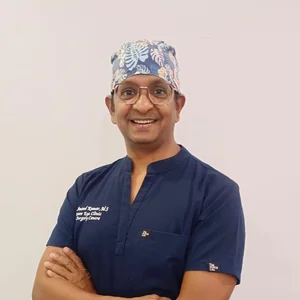
MBBS, MS (Ophthalmology), Fellowship in Pediatric Ophthalmology & Strabismus (USA). Chief Surgeon & Director at Utsav Eye Clinic.