
Squint (Strabismus) Treatment in Navi Mumbai
Squint (strabismus) is a condition where the eyes do not align properly, with one eye turning inward, outward, upward, or downward. It can be treated at any age through a combination of non-surgical methods (like glasses, prisms, or vision therapy) and strabismus surgery. At Utsav Eye Clinic in Kharghar, Navi Mumbai, Dr. Anand Kumar offers advanced, individualised squint treatment for both adults and children to restore eye alignment and improve visual function.
Understanding Squint (Strabismus)
Strabismus, commonly known as a squint, occurs when the six muscles controlling eye movement do not work together properly. This misalignment means that while one eye focuses on an object, the other eye is turned in a different direction. Squint is not just a cosmetic issue; it is a functional vision problem. It can lead to double vision, poor depth perception, and in children, permanent vision loss known as amblyopia (lazy eye).
Squints are broadly classified by the direction of the eye turn:
- Esotropia: One or both eyes turn inward (towards the nose).
- Exotropia: One or both eyes turn outward.
- Hypertropia: One eye turns upward.
- Hypotropia: One eye turns downward.
Additionally, a squint can be constant (present all the time) or intermittent (occurring mostly when tired, ill, or looking at distant objects).
Specialised Care for Every Age
Adult Squint Treatment
There is no upper age limit for squint treatment. Adult strabismus care focuses on treating double vision, addressing occupational visual needs, and achieving cosmetic realignment to improve confidence and social interactions.
Learn About Adult TreatmentPaediatric Squint Treatment
Early intervention in children is critical. Pediatric squint treatment aims to prevent or treat amblyopia (lazy eye), protect binocular (3D) vision development, and ensure optimal functional and cosmetic outcomes for the child's future.
Learn About Children's TreatmentNon-Surgical Squint Treatments
Not all squints require surgery. Dr. Anand Kumar provides comprehensive non-surgical management tailored to the patient's specific condition:
Prescription Glasses
In cases like accommodative esotropia, correcting the underlying refractive error (farsightedness) with glasses can fully realign the eyes.
Prism Lenses
Special prisms can be incorporated into glasses to alter the light entering the eye. This is highly effective in relieving double vision for adults with small misalignments.
Patching / Occlusion Therapy
When a squint causes amblyopia (lazy eye), patching the stronger eye forces the weaker eye to work, improving vision. This treats the vision loss, though not necessarily the physical turn.
Orthoptic Exercises
Also known as vision therapy, these specialized eye exercises can help improve eye coordination, focusing abilities, and treat conditions like convergence insufficiency.
Squint Surgery — Precision Alignment
When non-surgical options are insufficient for large or structural misalignments, squint surgery offers a definitive solution. The procedure involves adjusting the tension on one or more eye muscles—either by weakening, strengthening, or repositioning them—to restore alignment.
Dr. Anand Kumar specializes in advanced surgical methods, including the micro-incision fornix technique (which hides the incision behind the eyelid, leaving no visible scar) and the use of adjustable sutures in adults and older children to fine-tune alignment post-operatively for precise results.
Why Choose Utsav Eye Clinic?
- ✓ Fellowship-Trained Specialist: Led by Dr. Anand Kumar, who received extensive fellowship training at Aravind Eye Hospital and the University of Wisconsin, USA.
- ✓ Advanced Diagnostics: Precise measurement and evaluation using modern orthoptic equipment for accurate surgical planning.
- ✓ Day-Care Surgical Facility: Comfortable, fully equipped operating theatre allowing patients to go home the same day as their procedure.
- ✓ Ethical Transparent Care: Clear communication regarding diagnosis, expected outcomes, and transparent pricing structures with reimbursement assistance provided.
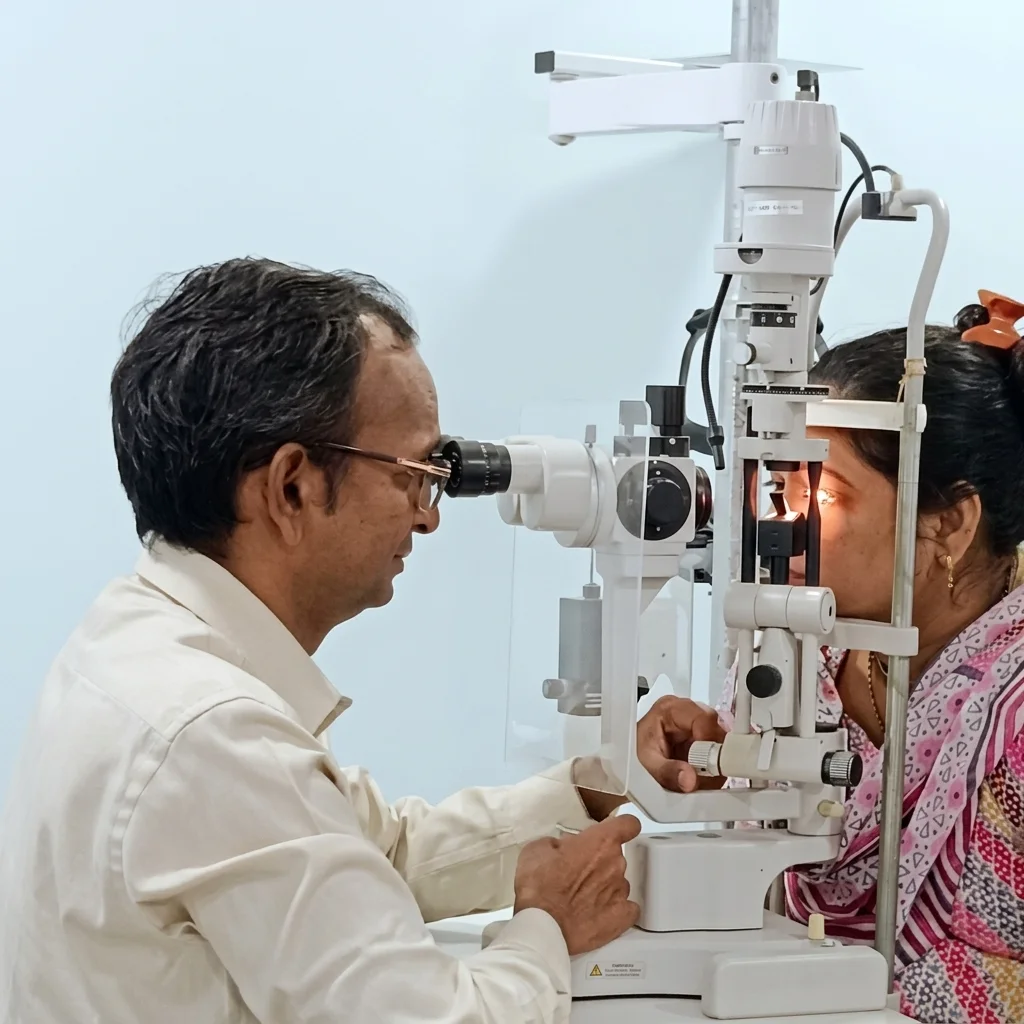
About Your Squint Specialist
Serving Navi Mumbai & Beyond
Located conveniently in Sector 21, Kharghar, Utsav Eye Clinic is a trusted center for strabismus care, serving patients from across the region including Kharghar, Panvel, Vashi, Belapur, Nerul, Thane, and South Mumbai. Our facility is easily accessible, providing comprehensive evaluations and surgical care closer to home.
Frequently Asked Questions
1. What is the best treatment for squint?
The best treatment depends on the cause and type of squint. Options include prescription glasses, orthoptic eye exercises, prism lenses, and strabismus surgery to realign the eye muscles.
2. Can squint be corrected without surgery?
Yes, some types of squint, such as accommodative esotropia, can be fully corrected with glasses. Vision therapy and prisms are also effective for certain small misalignments. However, large or structural misalignments typically require surgery.
3. Is squint treatment successful?
Yes, squint treatment is well-established for restoring cosmetic alignment and improving binocular visual function, particularly when addressed promptly.
4. Can adult squint be fixed?
Yes. There is no upper age limit for squint surgery. Adults can achieve restored eye alignment and relief from double vision.
5. Does treating squint improve vision?
In children, early treatment of squint is crucial to prevent or treat amblyopia (lazy eye) and preserve binocular vision (3D vision). In adults, it can eliminate double vision and expand the peripheral visual field.
6. How do I know if my child has a squint?
Look for signs such as one eye turning in or out, the child closing one eye in bright light, head tilting, or the eyes not moving together. A formal evaluation by a paediatric ophthalmologist is required for diagnosis.
7. Where can I get squint treatment in Navi Mumbai?
Utsav Eye Clinic in Kharghar, Navi Mumbai, led by fellowship-trained specialist Dr. Anand Kumar, offers comprehensive squint evaluation and advanced surgical treatments for all ages.