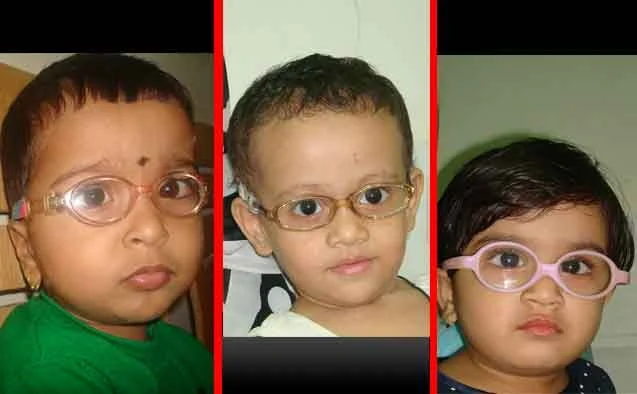

Understanding Amblyopia (Lazy Eye): Causes, Symptoms, and Treatments
Welcome to Utsav Eye Clinic's guide on Understanding Amblyopia (Lazy Eye): Causes, Symptoms, and Treatments. Led by Dr. Anand Kumar, our clinic provides advanced amblyopia (lazy eye) treatment in Navi Mumbai to help patients maintain clear, comfortable vision. Call us at 022 35569270.
What is Amblyopia (Lazy Eye)?
Amblyopia, commonly known as lazy eye, is a childhood vision development disorder where the vision in one eye fails to develop normally. It occurs because the brain and the affected eye are not communicating properly, and the brain starts to favor the stronger eye, virtually ignoring the signals from the weaker eye. Amblyopia is the most common cause of single-eye vision impairment in children and young adults, affecting approximately 2% to 3% of the population. It is critical to understand that the physical structure of the eye is usually completely healthy; the problem lies within the visual pathways of the brain. If left untreated during the critical developmental window of early childhood, amblyopia can result in permanent, irreversible vision loss.
The Three Main Causes of Amblyopia
Amblyopia develops due to any condition that interferes with clear focusing or binocular coordination during early visual development. The three primary causes are:
1. Refractive Amblyopia: The most common type. It occurs when a child has a significant difference in refractive power between their two eyes (anisometropia)—for example, one eye is normal while the other has high farsightedness or astigmatism. The brain ignores the blurry image from the refractive eye.
2. Strabismic Amblyopia: Caused by a squint (misaligned eyes). To avoid double vision, the brain suppresses the visual input from the misaligned eye, halting its visual pathway development.
3. Deprivation Amblyopia: The most severe form, caused by physical obstruction of light entering the eye during early infancy, such as a congenital cataract, ptosis (drooping eyelid), or corneal scar. This requires immediate surgical intervention.
How to Detect Amblyopia: Key Symptoms
Amblyopia is often called a "silent" condition because it rarely presents obvious outward symptoms. A child with one lazy eye will function normally using their strong eye and will not complain of blurry vision. Parents should look for subtle signs, such as a child rubbing one eye frequently, tilting their head to focus, squinting, or struggling with depth perception. Because it is so difficult to detect at home, regular dilated eye exams by a pediatric specialist are crucial.
Modern Treatments for Amblyopia
The primary goal of amblyopia treatment is to force the brain to use the weaker eye, strengthening its neural connections. Treatment options include:
• Corrective Eyeglasses: Prescribing the exact glasses power to provide a clear focus to the lazy eye, which is often enough to correct mild refractive cases.
• Eye Patching: Placing a special opaque adhesive patch over the stronger eye for a set number of hours daily, forcing the brain to rely on the weaker eye.
• Atropine Eye Drops: Using daily drops in the stronger eye to temporarily blur its near vision, encouraging the child to use the lazy eye for close-up tasks.
• Vision Therapy: Active visual exercises and games designed to stimulate the binocular system.
Why Age is the Most Important Factor in Recovery
The visual pathways in the brain remain highly flexible and receptive to treatment during early childhood (up to age 7 or 8). Beyond this age, the visual brain becomes "wired" and much less responsive. While treatment can sometimes help older kids, the success rate drops significantly. Early detection via screening at birth, 1 year, and 3 years is vital for complete recovery.
Frequently Asked Questions (FAQ)
Can amblyopia be cured in adults?
While traditional belief was that amblyopia cannot be treated after age 9, modern research shows some visual plasticity remains in adults. However, treatment is far more difficult and less successful than in early childhood.
How many hours of patching are required daily?
The duration of patching depends on the severity of the lazy eye, ranging from 2 hours to 6 hours daily, as prescribed by your pediatric ophthalmologist.
What is the difference between squint and lazy eye?
A squint (strabismus) is a physical misalignment of the eyes. A lazy eye (amblyopia) is a lack of normal visual development in the brain. A squint is a common cause of lazy eye.
Will my child have to wear a patch forever?
No. Patching therapy is temporary, lasting from a few months to a few years until the vision in the lazy eye improves and stabilizes.
Can laser eye surgery (LASIK) cure amblyopia?
No. LASIK corrects corneal shape to remove refractive error, but it cannot cure amblyopia because the visual deficit lies in the brain's visual processing pathways, not in the eye itself.
Are atropine drops as effective as patching?
Yes, clinical trials have shown that daily atropine drops are highly effective for mild to moderate amblyopia and offer a good alternative for children who resist wearing a patch.

MBBS, MS (Ophthalmology), Fellowship in Pediatric Ophthalmology & Strabismus (USA). Chief Surgeon & Director at Utsav Eye Clinic.