
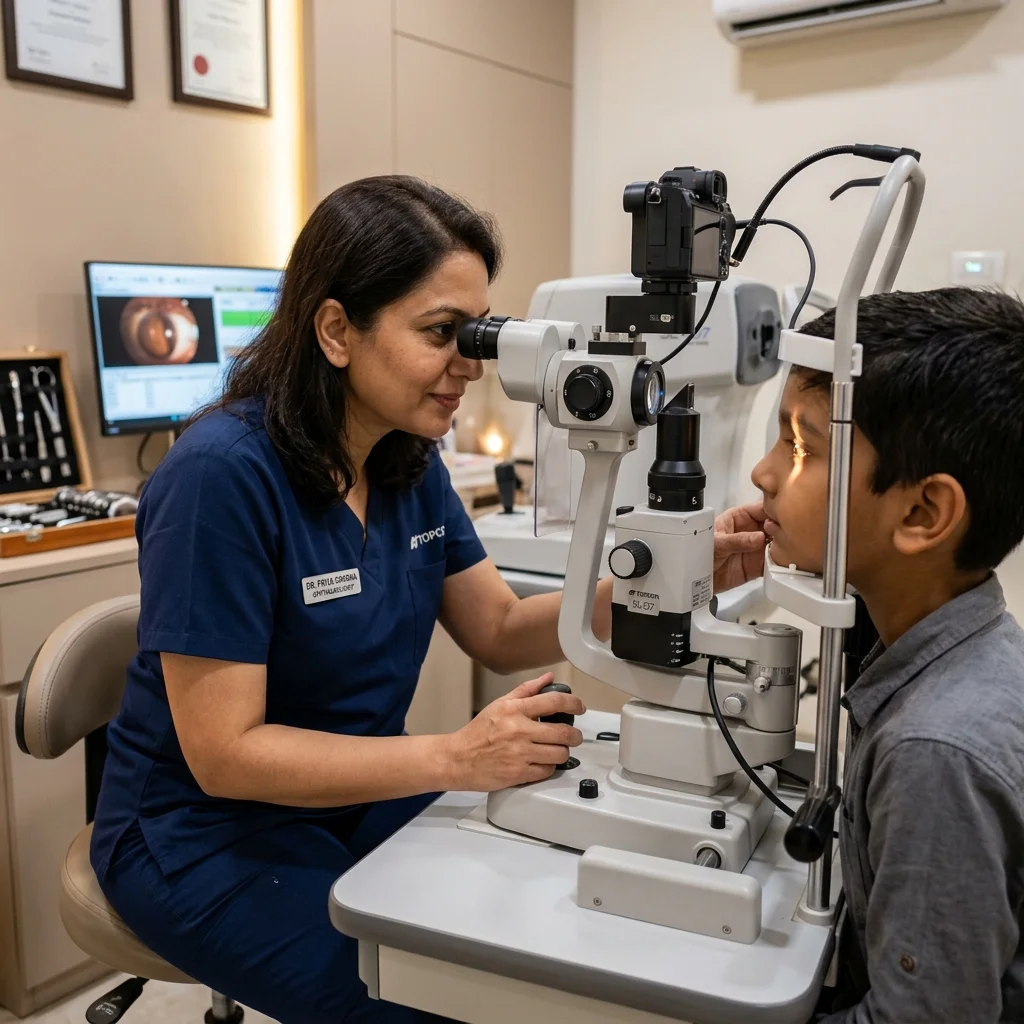
What is Neuro-Ophthalmology? When Should You See a Specialist?
Welcome to Utsav Eye Clinic's guide on What is Neuro-Ophthalmology? When Should You See a Specialist?. Led by Dr. Anand Kumar, our clinic provides advanced neuro-ophthalmology specialist in Navi Mumbai to help patients maintain clear, comfortable vision. Call us at 022 35569270.
What is Neuro-Ophthalmology?
Neuro-ophthalmology is a highly specialized medical subspecialty that focuses on visual problems related to the nervous system. The eye is essentially a camera that captures light, but it is the brain that processes these signals into the images we see. The optic nerve acts as the transmission cable, carrying over a million visual fibers from the eye to the brain's visual cortex. Any disease affecting the brain, optic nerves, or the cranial nerves controling eye movements can cause vision loss or double vision. Neuro-ophthalmologists have fellowship training in both neurology and ophthalmology to address these complex cases.
Symptoms That Require a Neuro-Ophthalmology Evaluation
You should consult a neuro-ophthalmologist if you experience visual symptoms that standard eye doctors cannot explain, such as:
• Double Vision (Diplopia): Seeing two images of a single object when both eyes are open.
• Sudden, Painless Vision Loss: Vision dropping rapidly in one eye (optic neuropathy).
• Visual Field Deficits: Losing peripheral or central vision in specific patterns.
• Optic Disc Swelling (Papilledema): Swelling of the optic nerve head detected during a routine check.
• Pupil Size Discrepancies: One pupil appearing larger or reacting slower than the other.
• Drooping Eyelids (Ptosis) or Twitching: Involuntary muscle spasms around the eyes.
Common Conditions Diagnosed and Managed
We treat a range of complex neurological conditions affecting vision:
1. Optic Neuritis: Optic nerve inflammation, highly associated with Multiple Sclerosis (MS).
2. Papilledema / IIH: Swelling of both optic nerves due to raised intracranial pressure (Pseudotumor Cerebri).
3. Cranial Nerve Palsies: Weakness in the 3rd, 4th, or 6th cranial nerves controling eye muscles, causing double vision.
4. Myasthenia Gravis: Autoimmune weakness causing fluctuating droopy lids and double vision.
5. Pituitary Tumor Visual Compression: Tumors compressing the optic chiasm, causing loss of outer visual fields.
Advanced Diagnostics in Neuro-Ophthalmology
At Utsav Eye Clinic, our diagnostics include Automated Perimetry to map visual field pathways, Optical Coherence Tomography (OCT) to measure optic nerve fiber health, and high-resolution fundus photography to track optic disc swelling.
Why Specialized Neuro-Ophthalmic Care Matters
Many neuro-ophthalmic symptoms can be early warning signs of serious systemic or neurological disorders, such as brain tumors, aneurysms, or strokes. A specialized evaluation is critical because early diagnosis can save not only your vision but also your life. We work in close collaboration with leading neurologists and neurosurgeons.
Frequently Asked Questions (FAQ)
What is double vision (diplopia)?
Double vision is seeing two images of a single object. If it disappears when you close one eye, it is binocular diplopia, which points to an eye alignment issue.
What is optic neuritis?
Optic neuritis is inflammation of the optic nerve that causes sudden blurred vision, dim color perception, and pain during eye movement. It is often treated with steroids.
Why is an MRI scan needed for a visual problem?
An MRI scan helps visualize the brain and the optic pathways, checking for nerve inflammation, compression from tumors, or vascular issues that standard exams cannot see.
What is Pseudotumor Cerebri?
Also known as Idiopathic Intracranial Hypertension, this condition mimics the symptoms of a brain tumor (headaches, double vision, swelling) but without a physical tumor.
Can a stroke cause permanent vision loss?
Yes, a stroke affecting the visual cortex or pathways in the brain can cause permanent visual field loss (such as losing half of the vision in both eyes).
What is Myasthenia Gravis?
Myasthenia Gravis is an autoimmune neuromuscular disorder that causes muscle weakness. In the eyes, it commonly causes fluctuating drooping of the upper eyelids and double vision.

MBBS, MS (Ophthalmology), Fellowship in Pediatric Ophthalmology & Strabismus (USA). Chief Surgeon & Director at Utsav Eye Clinic.